We finished May with a visit to Hamburg. It’s a beautiful city, because it was almost completely rebuilt after World War II bombing. The city surrounds a lake about the size of central park which makes it particularly scenic on a summer day.
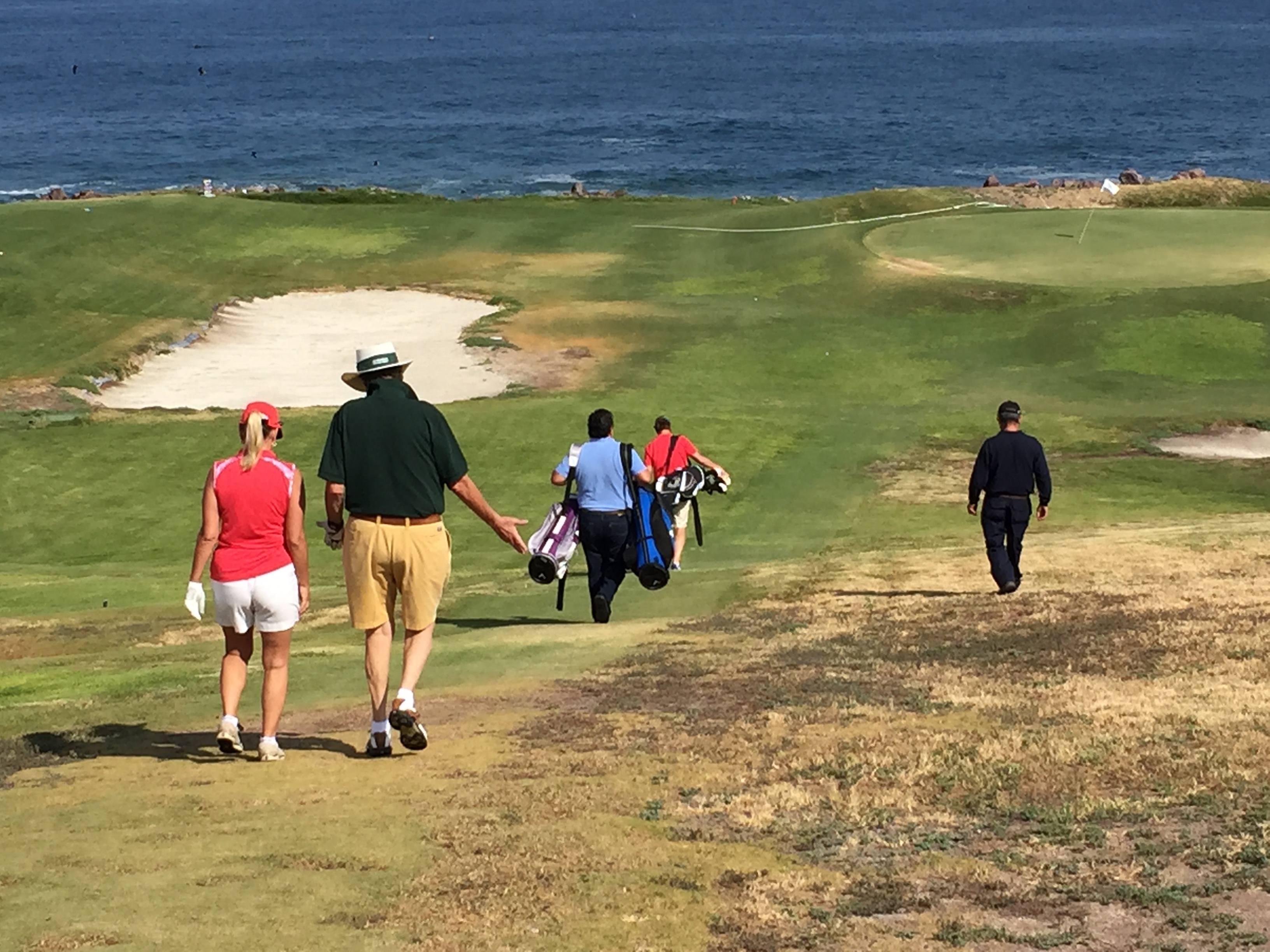
We enjoyed a day of golf at a challenging course. Debra’s been playing a lot more as she enjoys seeing the differences among various countries. I thought it was funny they had life ring next to the water, but I suppose it makes sense.
But I had an amazing subject for my blog video. “Miniatur Wunderland” is the world’s largest model train museum. In 2000, a couple of guys rented some warehouse space and began building an HO scale version of Hamburg. 15 years later, they’re still building and now have a team of artists, technicians, and builders who have expanded the exhibit to 68,000 square feet (the area of a football field). It does have trains for sure – almost 10 miles of track, 930 engines, and 14,000 rail cars. But more spectacular are the scenes and detail. 215,000 little people, doing everyday things. Cars, trucks and even airplanes that taxi and taking off. About every 10 minutes, day turns into night and 335,000 lights illuminate. They’re still building and have plans that go out to 2020.
We only had time to stay for one hour and it was not nearly enough. I was so fascinated by trying to take it all in that I’m disappointed with the pictures and video I took. But if you like the video orientation, I encourage you to look at “Miniatur Wonderland” on line, especially the professional videos done by the museum. If you get to Hamburg, plan on 4 hours and try to go in the middle of the week. If they tell you there’s a wait, don’t worry about it – they have a nice diner-like café with toys for kids, books and beer for adults. A very professional operation.
Sorry, but the video is 8 minutes – skip forward if you must, but look at the variety to appreciate how clever they are.
From Paris we took a train up to Antwerp, Belgium to rejoin the ship. The Antwerp station is one of the prettiest I’ve ever seen. As you may have seen on the news, much of Europe was inundated with rain through the month of May. Paris had a record month with almost 3 times the historical average rainfall. We got lucky. Paris weather was great, and Antwerp was even better.
We took a helicopter ride to get an overview of the city. Outside of the “old town,” it seemed pretty industrial to us. But we were docked at the edge of the historic area and enjoyed the architecture, the restaurants, the chocolate, and the beer!
After Belgium, we stopped in Amsterdam, Netherlands for a couple of days. (I finally figured out that Holland is just a region of the Netherlands – I was always confused). Since we’d been before, we went on a golf outing the first day, then went to the huge Royal Flower Auction the second day.
This is no ordinary auction. It is, in fact, the world’s biggest flower market – they sell 20 million flowers every day! It started as a little flower shop in 1911, but now is a fascinating complex that would cover 220 soccer fields. A high degree of automation combines with 3000 employees moving racks of flowers through warehouses in what looks to be a chaotic fashion. But if you watch the time-lapse video below, you’ll see that it’s more like a synchronized dance. Direction comes from the “trading floor” where traders bid on each day’s crop of flowers. While they used to all come from the region, this hub now handles flowers from many parts of the world – some just electronically, but most physically.
In April, we left the ship for our annual pilgrimage to St. Barth’s. It is definitely our favorite Caribbean Island and we shared a beautiful villa with four good friends. Then it was home to the States for taxes and family visits. We got to spend quality time with each of our 6 kids and all but one of the 12 grandkids. We sent the parents away on a four day vacation while we moved into each of their homes. School and homework, soccer, lacrosse, guitar, violin and piano lessons, pasta and pizza making, ballet and recitals, hockey and HS play practice, carnival rides, Cirque de Soleil and trampoline outings, driving lessons (yikes!), acting as the class “mystery reader” and a geography fair – we were busy all of the time. It was a great few weeks, but it sure felt good to sleep past 6:00AM when we were done!
Then back to the Ship in our beloved France. We spent a few days in beautiful Bordeaux with dear friends we haven’t seen since I retired. A very educational tour of the wine country ALMOST converted me from beer. But once I heard that tannins break down proteins, causing the saliva ducts to close and thus making a wine taste dry, I decided to go back to Coors Lite. Actually, I’ve always liked Bordeaux wines, and I have a new appreciation for the subtleties of how they’ve kept the quality so consistently superior over the last 250 years.
One of 7000 Chateaux in Bordeaux
Gerard and Francois
Grape crusher (no more bare feet)
Miroir D’eau (water mirror)
Next on to Paris – Debra’s favorite foreign city. We’ve probably been there 25 times, but I was always working and never really got to savor its beauty. This time I did a little homework to figure out how it came to be so scenic.
In 1848, Napoleon III, the first democratically elected president, finally took on the project to improve the city and hired George Haussmann to develop and implement a master plan. In 1852, when NIII’s term-limit was reached, he decided democracy was over-rated and declared himself Emperor (clever). Pressing on with the city improvement plan, he took “eminent domain” to a new level; it was more a “demolish and build new” than a “rehab.” Over 17 years, Haussmann was empowered to convert narrow streets, pitiful sanitary conditions, and severe over-crowding into what was the foundation of today’s beautiful Paris. Water and sewer systems, wide boulevards, buildings limited to six stories, trees and parks – he was a visionary whose plan was implemented long after he was fired, albeit at the expense of the population of the time. I’m sure we’ve all complained about rigid zoning and building codes when trying to build or improve a property, but when in Paris you can appreciate the benefits of such an approach.
A neighborhood
The Opera House
Printemps Department Store
Tower and Moon
We do love France. We’ll have to visit more often, even if by land!
I’m not sure I ever really appreciated that Brazil is about as large as the lower 48 US states. After Rio, we toured the northern coast towns of Salvador, Recife and Fortaleza. We enjoyed beautiful beaches, a dune ride through the desert, friendly people, and some unique cultures. Salvador and Recife were key ports for the slave trade and thus have a vibrant Afro-Brazilian feel.
Wild ride through the desert near Fortaleza
Recife, Brazil
Evening in Recife
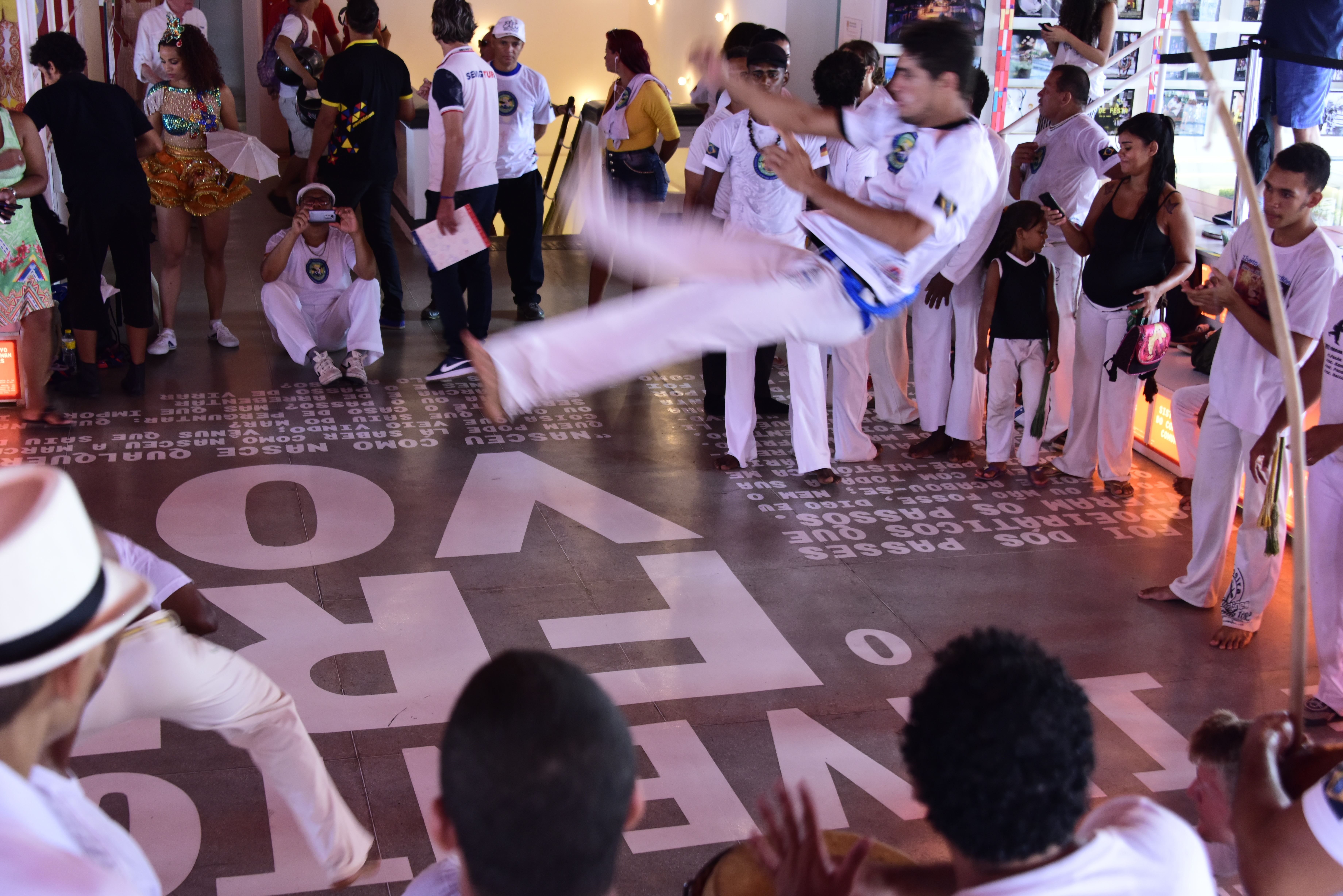
We saw a fascinating demonstration of Capoeira, a “dance” developed by slaves who were not allowed to defend themselves with weapons. It was really a thinly disguised form of martial arts that has now become a discipline.
Capoeira demo
Between men, it looks a bit like “air” kick-boxing, but solo dancers also perform. It must take amazing endurance, strength and balance. Take a look at the short video below if you want a new work-out regime!
In Recife, we went to a beach with great body-surfing waves. I was having a great time until a pregnant woman came running into the surf warning me to get out. Turns out there were about 5 large sharks moving in my direction. We later learned that that beach is the most shark infested in the world – any wonder no one was swimming! As we left for lunch we saw the warning signs, so I couldn’t help but take a few pictures for Debra’s Facebook account.
We sailed into Rio de Janeiro on Saturday morning of Carnival weekend. Four years ago, we experienced the best of Carnival and considered it one of the highlights of our travels. It takes some conditioning, but if you can commit yourself to a number of all-nighters, there is nothing like it in the world. You can’t get the full impact by going for only a few hours. I tried to think of it like an important international business trip to a time zone 12 hours off of my body clock.
We invited our good friends, Ric and Loraine, who still work in the U.S. They could only spare a long weekend, but agreed to make the trek. An over-night flight from Miami, followed by the 11PM-6AM formal “Magic Ball,” followed by marching in the Sambadrome and then watching the parade to the end (5:30AM) and, finally, an overnight flight back home to work. They’re my heroes!
The “Magic Ball” is THE high society event of the season. Famous singers, politicians, and actors attend, drawing large crowds to the red-carpet entry. It’s the place to see and be seen. We didn’t know anyone, but it’s the kick-off to Carnival, so we joined the fun to get in the mood. We managed to stay to the end and got back to the ship in time to meet the morning tour group going out for the day.
Famous Ric and Loraine
11PM
7AM
But the big highlight is the Parade held in the Sambadrome. To appreciate this extravaganza, I need to give you a little background. There are a lot of misperceptions, or at least lack of understanding of this event.
The Carnival parade in Rio is not a crowd of drunks trying to catch cheap bead necklaces like in New Orleans. It’s not a crowded march through the streets dominated by petty theft. It’s not a night of nudity (South America is a largely Catholic continent that doesn’t tolerate nudity.) And it’s not an event for the wealthy like the Ball.
It’s the Brazilian “Super Bowl” – a very serious competition that draws all social classes together. The main contenders are 12 Samba Schools (very large guilds, mostly from the poor favelas) who work the entire year to develop a theme, a song, a dance, hundreds of costumes, and numerous enormous floats. The contest runs over two nights, with 6 schools competing each night in the Sambadrome – a long, specially-built stadium that holds 90,000. Each school, often 3,000 people strong, parades through the Sambadrome in waves (alas) of costumes and floats for 90 minutes. Points (and penalties) are awarded for a long list of elements and the winner is declared on Ash Wednesday. The colors, the energy, the music – it’s just impossible to capture in words or pictures.
For a donation, a limited number are allowed to dress and dance with a school. We did it four years ago, and wanted Ric and Loraine to experience it. It’s very, very hot (95-100F) and hard work dancing, smiling, and pretending to sing the words for almost 2 hours. But the school is being judged on every little detail, so we did our best. It’s hard to describe the feeling entering the “gauntlet” with bright lights and a cheering crowd of 90,000. Such a privilege.
When we finished, we drank four quarts of water and then went to great seats to watch until dawn. Though come to think of it, I don’t know why they bother with seats – everyone stands, dances, and sings all night. The passion is palpable.
Debra calls this “The Greatest Show on Earth.” I remembered it that way from four years ago, but didn’t expect to feel the same on the second round. I was wrong. I’ve been to the Super Bowl half-time show and to the closing of the Winter Olympics – not even close. This is a spectacle like no other. If you have a bucket list, this needs to be on it.
Click to scroll through larger photos:
It really was hard to get down to a 10 minute video, but here it is:
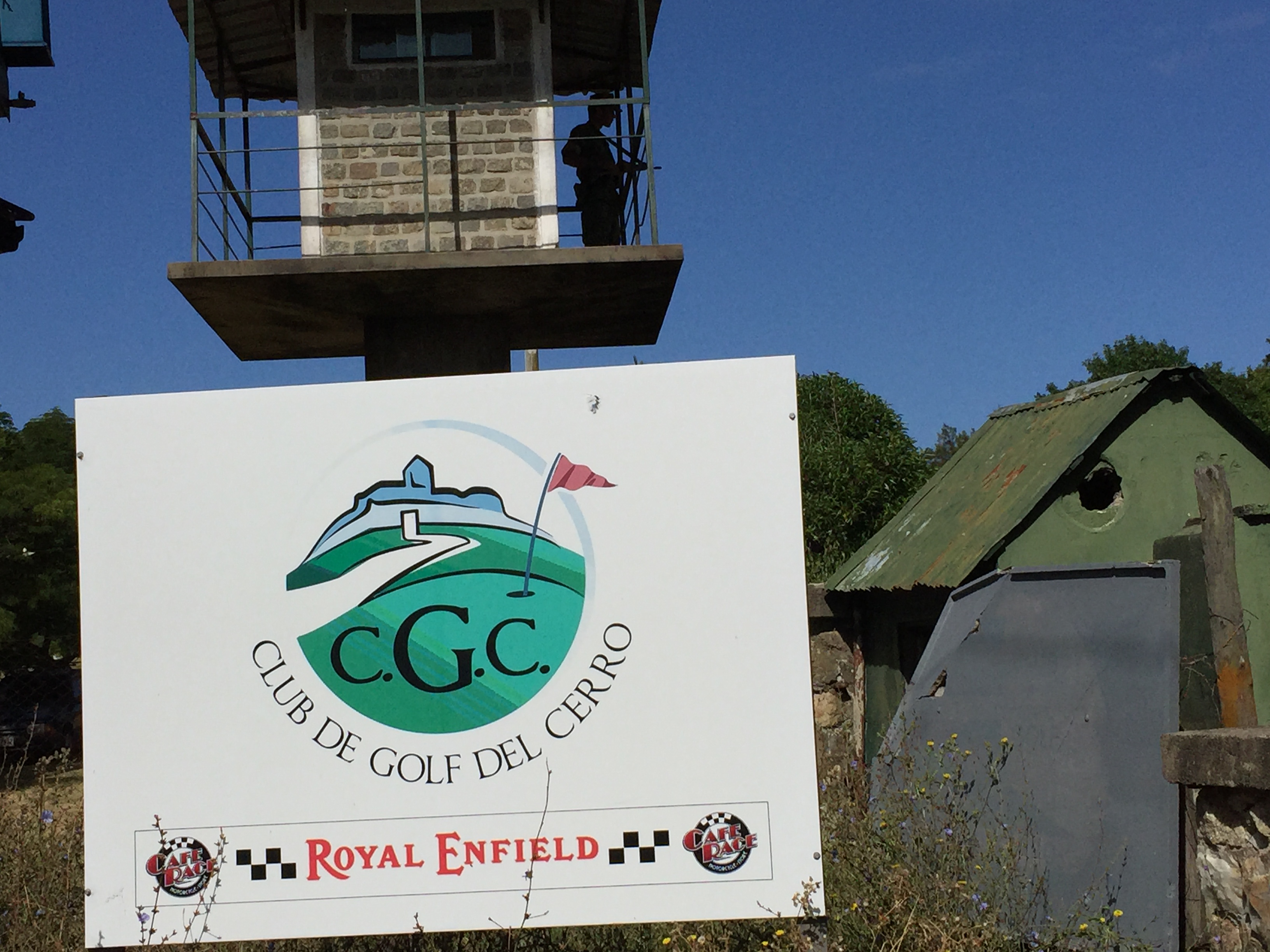
We returned to the South American continent at Puerto Madryn, Argentina – it was great to get back to warm weather, beach and sun. We sailed up the coast to Montevideo and enjoyed a round of golf on the coast. Interestingly, the course bordered on some military installation with armed centuries in towers watching over us – an eerie feeling.
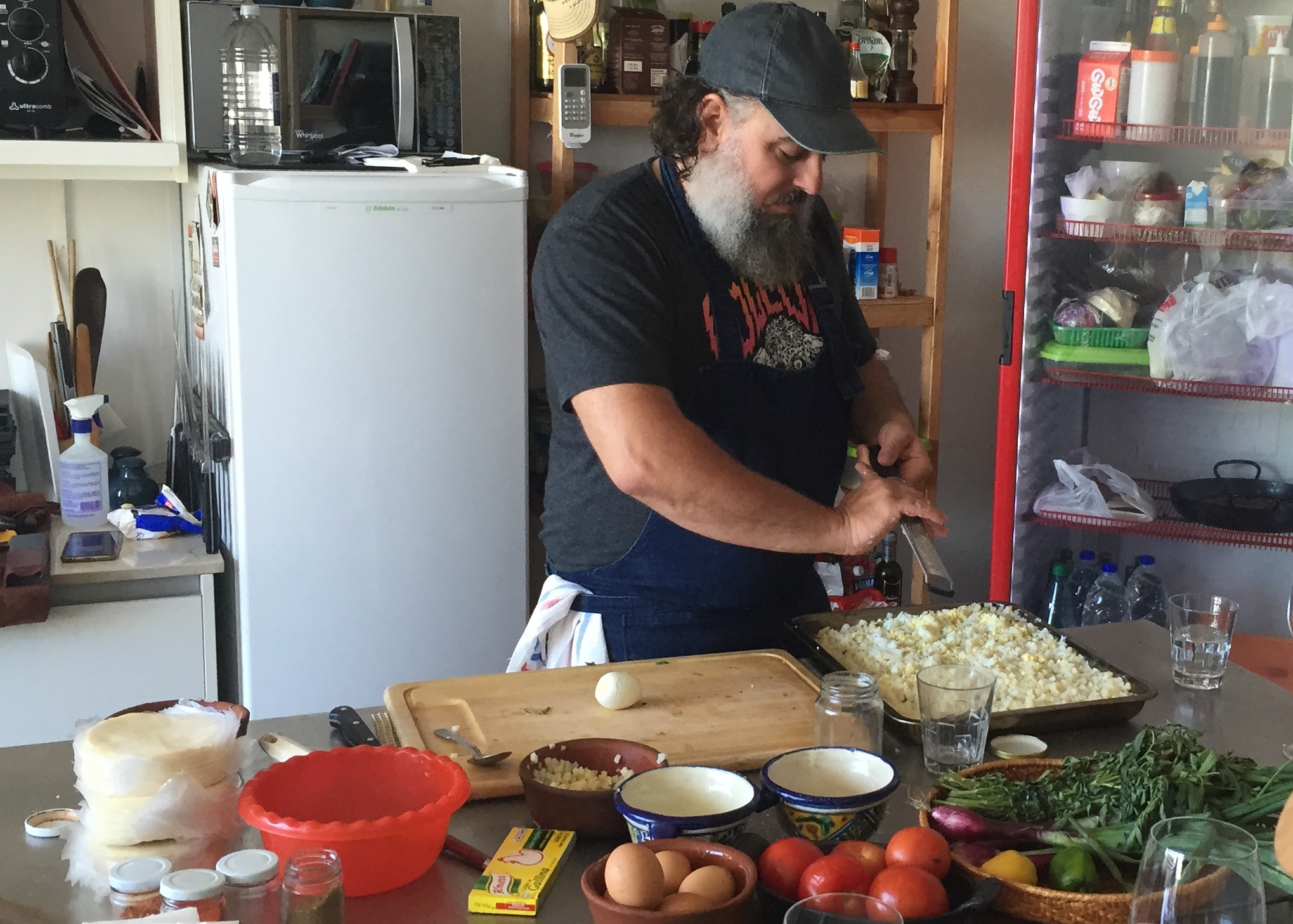
Next stop, beautiful Buenos Aires – sometimes called the “Paris of South America.” Debra organized another of her famous “foodie tours” that was a big hit. The highlight was an empanada making class led by a famous local chef.
Taste better than they look
Chef Pages
It was the first time he’d ever done one. He had been a psychologist, but said he got depressed talking to depressed people all day. He was such a character that the entertainment was almost as good as the resultant food. The empanadas we made weren’t pretty, but I’ve never tasted one so good. If you go to BA, visit “Peron Peron” and try one!
Because we’ve been to Buenos Aires before, we took a side trip to visit the famous Iguazu Falls on the border of Argentina and Brazil. 275 waterfalls span over a width of 1.5 miles – some of them twice the height of Niagara Falls. The weather was terrible, with torrential rains that made the water brown and photography challenging. We donned ponchos and took the upper trail on the Argentina side to see it from above and then bussed to a beautiful hotel on the Brazilian side for the night. We had hoped to take a helicopter tour the next morning, but the low clouds caused a cancellation. Instead we joined with some friends and booked a Zodiak boat trip up the river and under the falls. They gave us ponchos that were a bit of a joke – we all got drenched!
I made a video of our outing (8 minutes), including some stock helicopter footage that I didn’t take and also a clip on a little fun I had with the group as they slept in the bus on the way home.
If you don’t know about the “Heroic Age of Exploration” of the Antarctic, it’s an interesting period as Amundsen, Scott, and Shackleton raced to the South Pole in the early 1900’s. Amundsen won the race, Scott died trying, but it was Ernest Shackleton’s attempt to cross the continent that is most memorable – a desperate story of survival and leadership.
We followed his evacuation route from the Weddell Sea, to Elephant Island, then 800 miles to South Georgia Island through what are typically the worst winds and seas in the world. But he did it in a 16 foot life boat, we were a little more comfortable. I won’t take any more time on it here, but it is worth your research (or find one of the numerous documentaries) – a fascinating story.
South Georgia Island was the stop all our nature lovers longed for. Originally an important stop for whalers on the way to the Antarctic, it now is a preserve with thousands of seals, birds, and penguins – actually hundreds of thousands of king penguins (second in size to the emperor penguins you might have seen in “March of the Penguins” – also recommended). We stopped at the old whaling station Shackleton finally reached, and retraced some of his steps to a waterfall named after him.
The mountains Shackleton climbed to safety.
Abandoned whaling station
Hike to Shackleton Falls
The highlight of the trip was St. Andrew’s Bay – the largest king penguin colony – best photographed at sunrise. Unfortunately, in January, that’s 4:30AM. So for the sake of you blog fans, I (and by I – I mean Debra was sleeping comfortably) did my duty and had a great morning on the beach watching the elephant seals and penguins. They so rarely see humans that they aren’t even afraid of us, so it was a photo-rich environment. I could only cut my collection down to 13 pictures:
The elephant seals do more chest bumping than the NFL
Kids trying to imitate dads.
While the pups played.
Not everyone wakes up the same
Slow to wake up, even in the water
Some hangovers were evident
200,000 strong
Watching the sunrise
Second row had to crane their necks to see the sunrise
Morning stretch
Some hate the morning
Some love the morning
Then off to fish
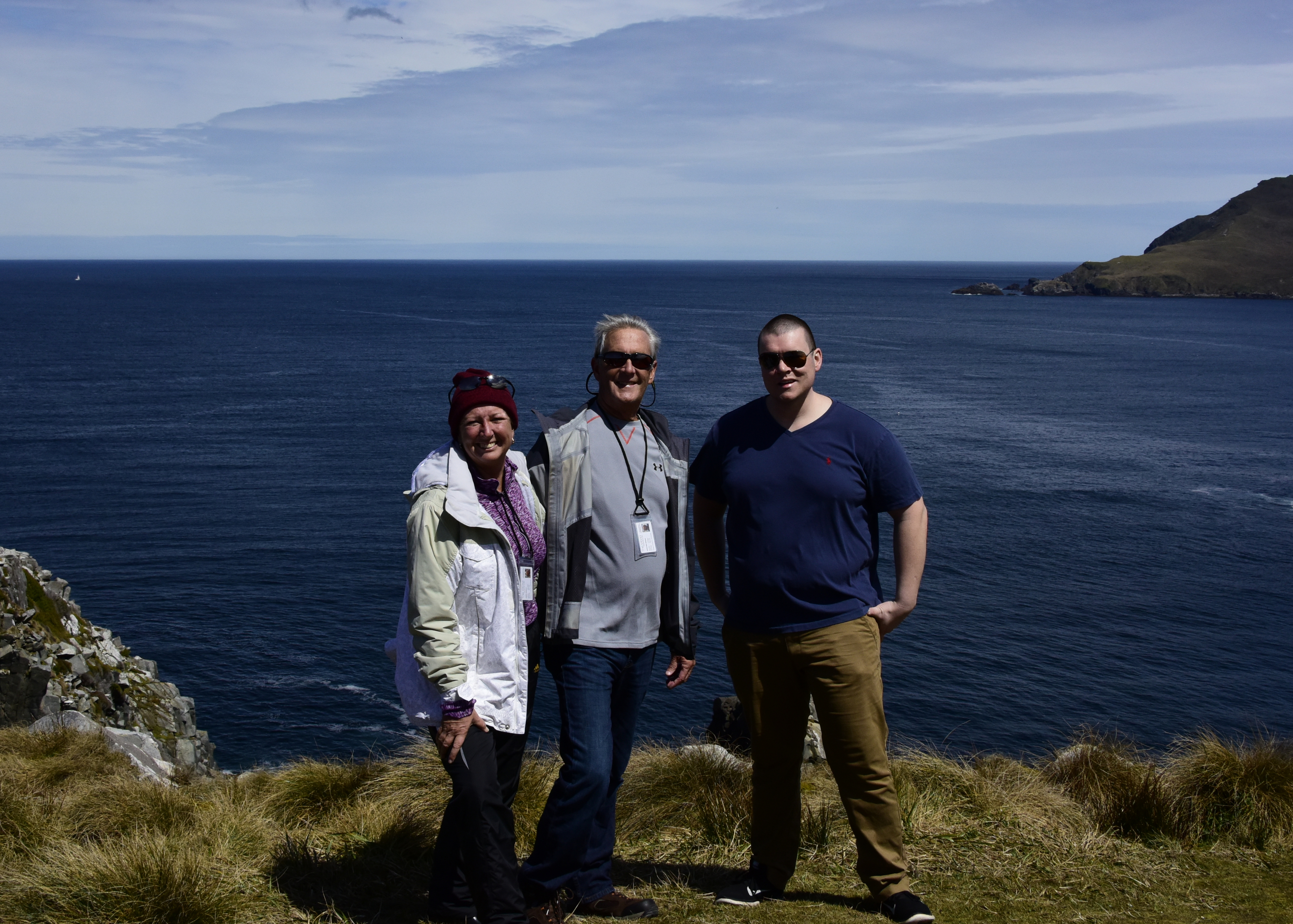
After four days in South Georgia, we crossed through rough seas to the Falkland Islands. Again the weather cooperated and we hiked to a spectacular albatross colony for some views and shots.
Albatross chick and egg
Colony in Falklands
West Point Falklands
Mamma and chick
Then, at long last, we sailed to northern Argentina and warm weather. A month of amazing vistas, wildlife and unique experiences, but we’re ready for some warm weather!
A video – only if you’re into creatures (3 minutes):
After Christmas, we continued our sailing along the Antarctic Peninsula and the beautiful weather continued. We had a good band on board for a fun New Year’s Eve, and we had the opportunity for a real “Polar Plunge.” I normally do dumb things for this blog, but I took Debra’s health warning and passed on the icy dive. Scott however, was goaded into representing us (included in the video below).
Cape Horn, tip of South America
We came back up north to drop off those who could only come for the holidays. The Drake Passage was so unusually calm, that we were able to stop at Cape Horn, the Southernmost point of the Americas and tour the Chilean station there.
Filly’s tee at Ushuaia National CC
Then back to Ushuaia, Argentina, where we said goodbye to Scott and good friends Doug and Colleen boarded for the more serious expedition to Antarctica, South Georgia and the Falkland Islands. We played golf a the Ushuaia Golf Club, that bills itself as the “Southest Course in the World.” It’s actually also a horse farm – Debra had a problem on the seventh hole as a mare and her foal were resting on the women’s tee. Then we headed back to the Antarctic, after another calm Drake Passage crossing – a bit disappointing for Debra and me as we’d hoped to see waves crashing over the bow.
Friends Doug and Colleen
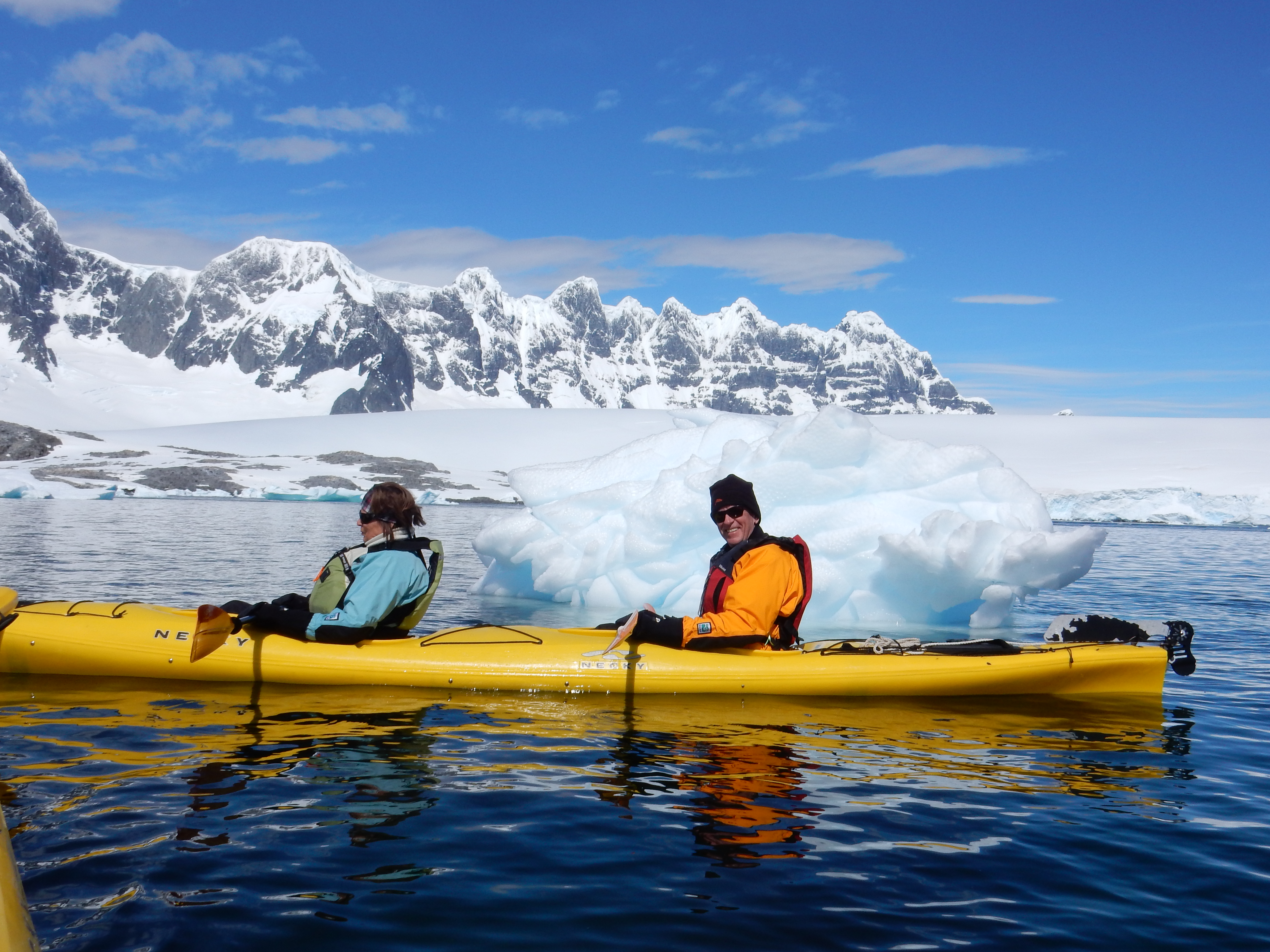
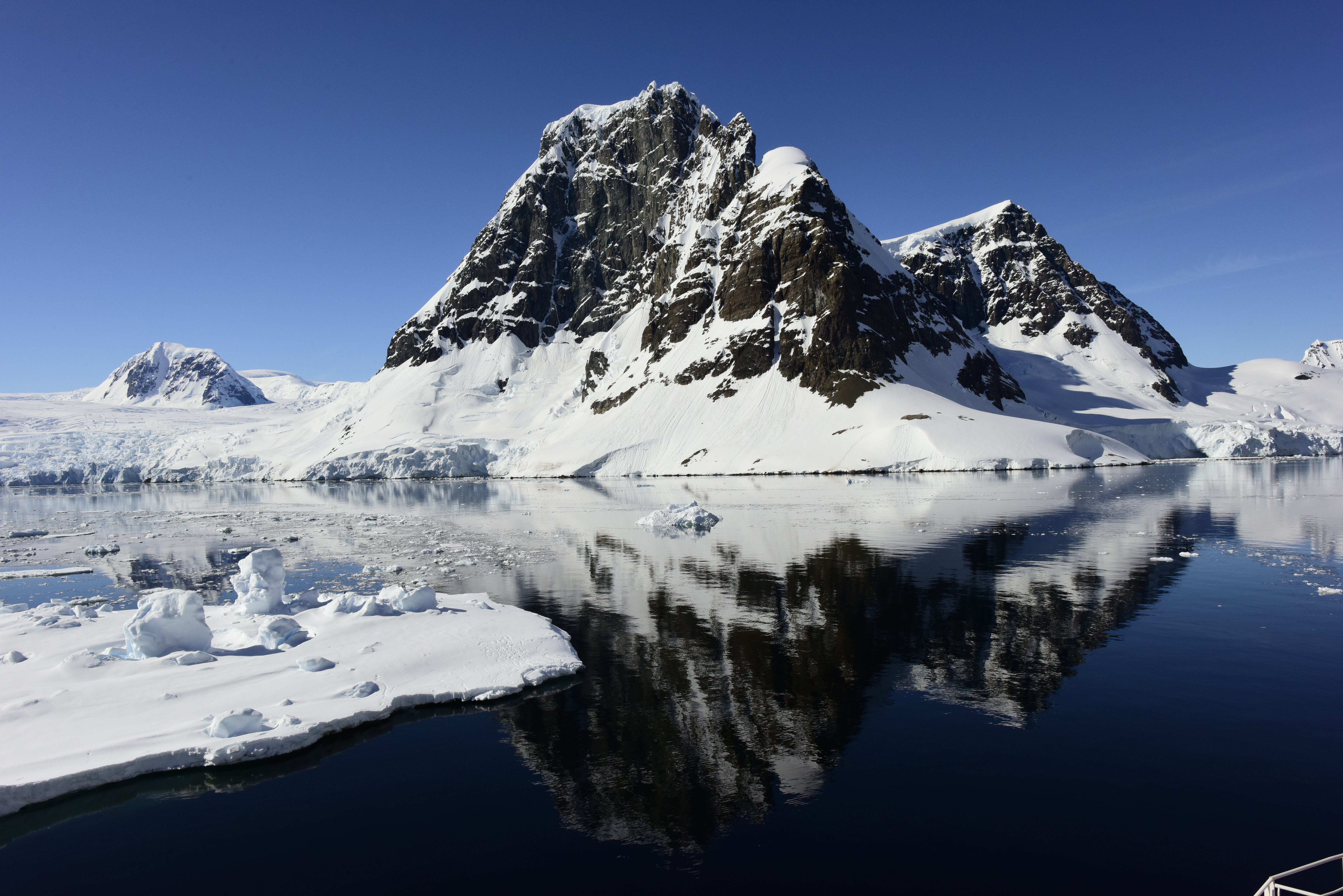
The weather in Antarctica was again spectacular and we signed up for a number of kayaking outings to enjoy the vistas. With the beautiful scenery, a trip through “iceberg alley” and sunsets that last for hours, I couldn’t stop taking pictures. I spent hours cutting photos down to less than 1,000. I’m sorry to subject you to the 20 or so included below, but I just can’t manage to delete them further. What I can’t seem to project, is the sense of scale. The mountains soar 9,000 feet from the sea, and the tabular icebergs we sailed right next too are 100-250 feet tall!
But before continuing, your geography question for the day:
List the 7 continents in order of size. Hint: In the winter, the ice of Antarctica makes it 2x larger than it really is – just rank the continents by land mass. Another hint: you won’t get this right.
Some of my favorite photos (click to enlarge and scroll through):
Note the whale
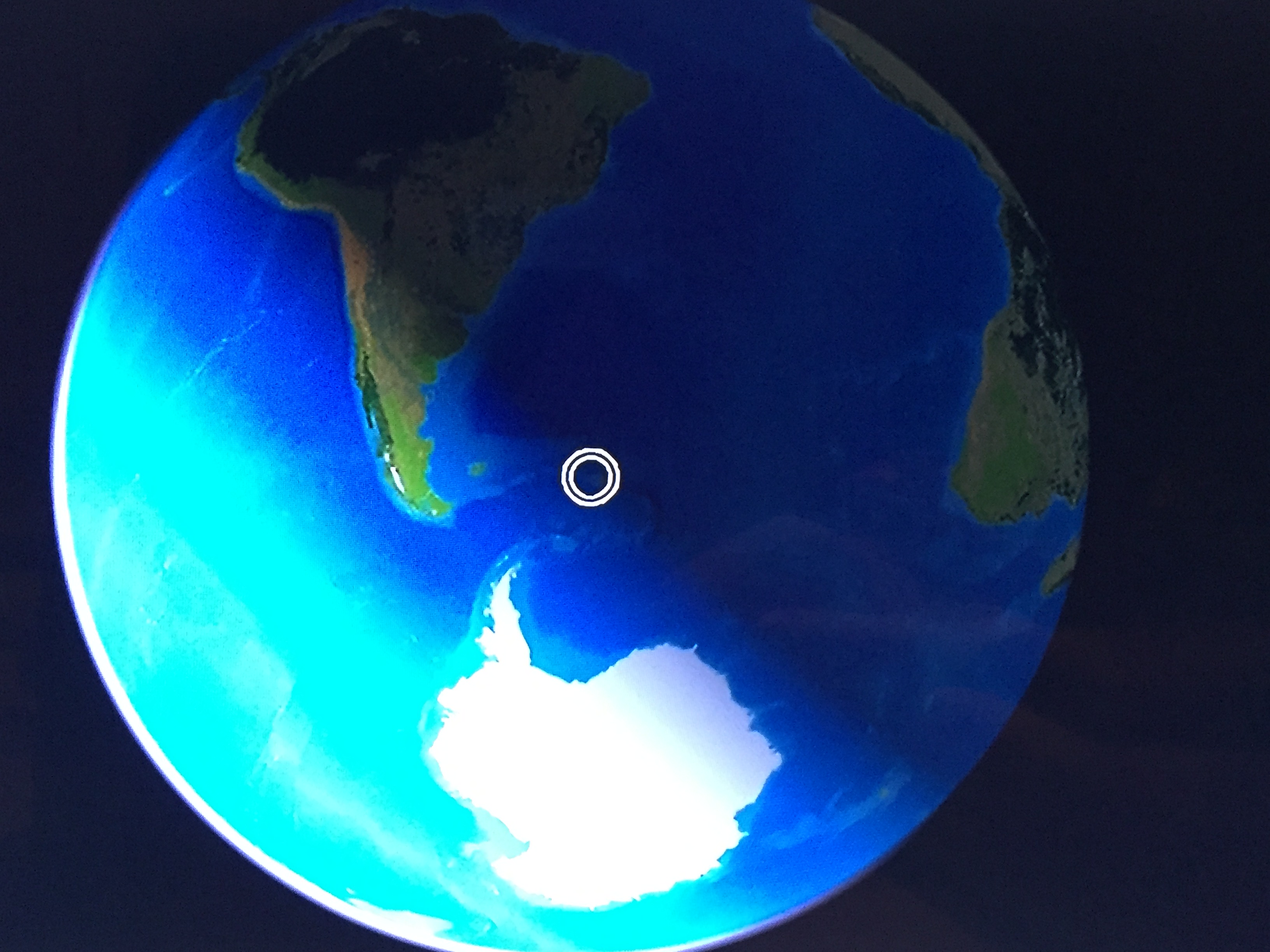
Antarctica, even without ice is huge – bigger than Australia and Europe. Even bigger than the continental U.S. and Mexico combined! I sure didn’t know that. We also had an outstanding geologist on board who explained the amazing data we’re able to gather from this area. At its maximum, the ice here is almost 3 miles deep and millions of years old! By drilling and taking core samples, modern equipment has been able to determine temperatures and air quality back 800,000 years so far. We are now able to assess the compressed air bubbles with such precision, that they can detect when we added lead to gasoline for cars (1924)!
Global warming? Yes, we’re in a hot cycle that has repeated about every 100,000 years in the last 400,000 years. And as sun people, Debra and I prefer that to being in an ice age. While temperatures are at about the same level as the last 4 hot cycles, the CO2 level is dramatically higher than prior peaks. So is our current global warming a natural cycle? Yes. Is human activity raising CO2 levels and likely to influence global warming further? Probably.
Will the humans survive? Most likely – we’ve demonstrated amazing adaptability over the centuries – it’s all of the other species that are at risk. But weather, political systems, agriculture, water availability may create a new form of chaos (and our land-based home on the CT shore may go under). So the question for this and subsequent generations is, why NOT try to moderate our global impact?
A 7 minute video of the trip (not the same as prior)
I would normally wait until completing a journey within a country or region, but this Antarctic trip is so unique I thought I’d share an interim report. Besides, by now, you’ve probably tired of your Christmas presents and assembled and broken all of your kid’s toys. I hope you didn’t have a hoverboard fire!
Scott and Debra in Ushuaia
As with almost all Antarctic expeditions, we started out from Ushuaia, Argentina – a lively town catering to lovers of the outdoors similar to Queenstown, NZ or a ski village in Europe or North America. Debra’s stepson, Scott, joined us for the 10 day trip. We had spectacular weather and a great sunrise (at 5AM) which gave Ushuaia an eerie look as we departed.
Ushuaia, Argentina at sunrise
The crossing of the Drake Passage can be “exciting,” but for our maiden voyage, it was a calm two-day sail.
We cruised through the South Shetland Islands and made our first stop at Deception Island. This active volcanic island has a horseshoe-shaped caldera into which ships can sail for protection from wind and seas. During the very early 1900’s, it was an active base for the whaling industry, but later it became solely an outpost for scientific research.
On September 11, 1967 a violent volcano occurred that forced the evacuation of the few researchers encamped there. The eruption came in surges and, with each, the hot air caused a “thunder shower” that turned to hail. Following each such cycle, a thick layer of ash settled. Our on-board guide (who was working there at the time) said the earth looked like a black and white layer cake if you dug a hole. Luckily, a Chilean expedition was in the area and he was evacuated via helicopter.
The day we arrived at Deception Island, the snow and howling wind in this “protected” harbor made it seem less than inviting, but we went ashore anyhow for our first taste of the Antarctic summer. I can’t imagine spending the winter there like our guide did, much less being trapped by a volcano in the spring!
Former British research site
Survival supplies in case we get stranded by storm (yikes)!
A summer day on Deception Island (thus the name?)
The next day we moved to and went ashore in Neko Harbor, our first contact with the Continent. We spent time observing a penguin colony. Only 3 of the 18 species of penguins in existence are prevalent in this area and we’ll see many, many more in January when we go to South Georgia Island, so I’ll save the penguin lecture for later.
But, for your bar bet today:
About how many penguins are in the Arctic region (estimate to the nearest million)?
About how many polar bears are in the Antarctic region (estimate to the nearest 10,000)?
Bird attack. It got loud.
Neighborhood friend
Penguin trail up the mountain
These bet’s answers are easy to remember – none and none. For some reason, penguins never made it north, nor polar bears south. Go figger.
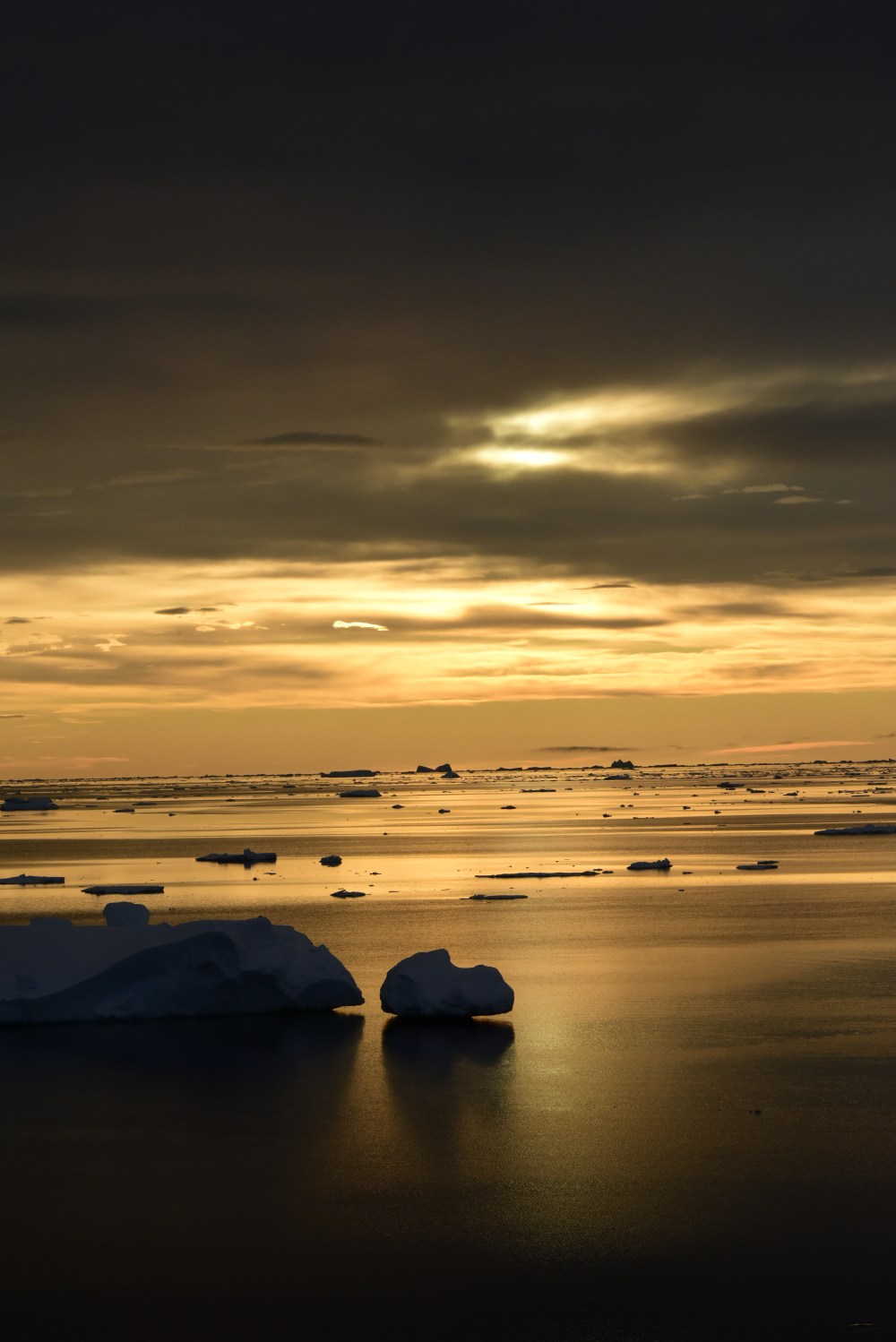
The highlight of our first week was the spectacular sunset on the night of December 24th, and the cruise through the Lemaire Channel the next morning. Because we were so far south, and because it’s late December, the sun barely sets at all, and it stays light 24 hours a day! After dinner on Christmas Eve, the view of the horizon just kept getting better and better. I almost ran out of film! At around 12:30 in the morning, the clouds blocked the direct sun, but an opening in the clouds in front of the distant mountains allowed it to bathe the sea in gold, and then reflect up on the undersides of the clouds. A photo doesn’t do it justice, but here’s an attempt:
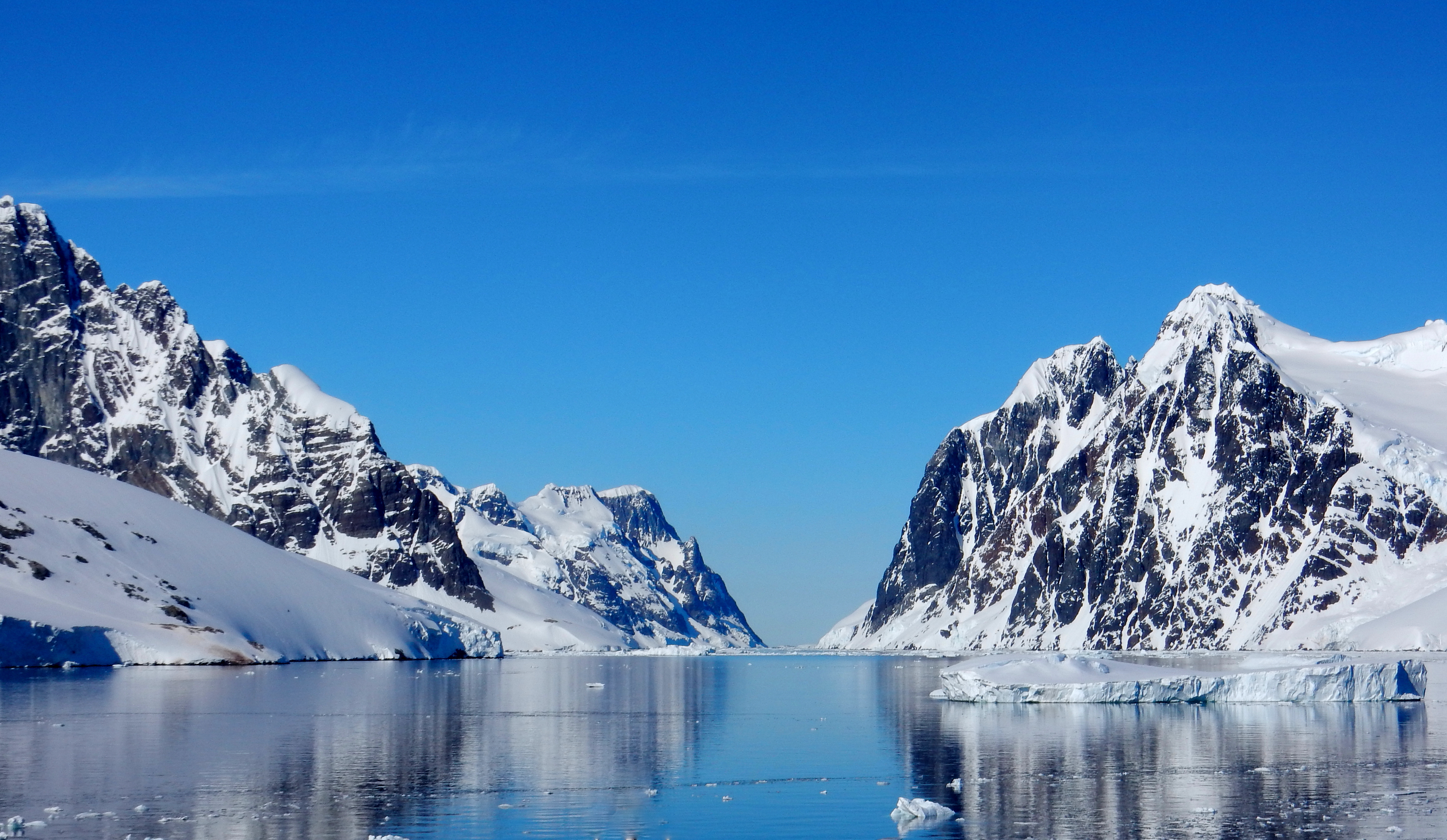
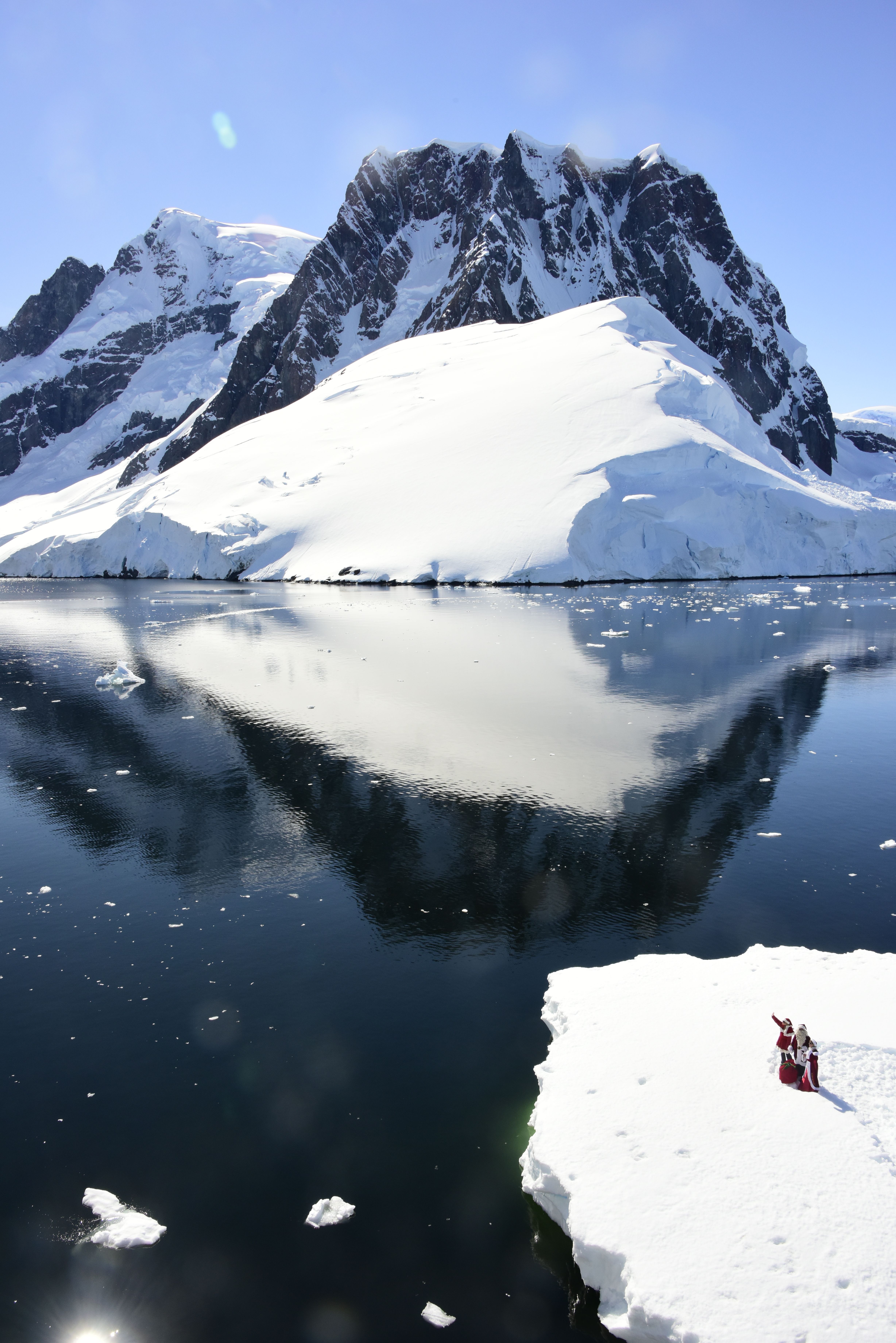
We stayed up until 2:00AM because we just could not stop taking pictures of the amazing scenery, but then had to arise by 8:00AM to enjoy the vistas through the narrow Lemaire Channel – probably the most beautiful and visited spot in Antarctica. The weather was spectacular and the calm seas offered glorious reflections!
Santa and helpers
At the end of the channel was an ice floe with “Santa and his helpers” on it. Every year, the ship’s crew play “can you top this?” with the arrival of Santa for the children on board. Hard to believe they can ever top this one. Your cell phone screen may not do this justice, but I hope you can get a sense of our wonder!
While going through the channel, I also made a time-lapsed video. It’s our Christmas card to you and really worth watching (1 minute).
It’s hard to summarize our time in Chile in a few paragraphs. It’s an average of 110 miles wide, but stretches over 2600 miles north to south – going from desert to snow-covered fjords. Picture a narrow country beginning at the tip of Guatemala and extending north to middle Alaska.
While up north, we played some golf. At Coquimbo we went to a short 9-hole course on the ocean but it was closed. We played it anyway. Since there were no carts, we recruited our taxi driver (in jeans) to help with bags. He wasn’t very good at reading putts though.
The morning we played, we were awakened by a series of loud bangs. It was as if the ship was being rammed repeatedly from the side. We later learned that it was an earthquake (5.5 on the Richter Scale). You may remember that in 2010, about two weeks after Haiti, Chile had an 8.8 quake that caused a 16 foot tsunami. The world’s worst earthquake of 9.5 was also in Chile in 1960. It caused a tsunami that was still 35 feet high when it reached Hawaii, 15 hours later. It even caused a volcanic eruption. California seems tame in comparison.
We got off the ship for a couple of nights in Santiago, the capital of Chile.
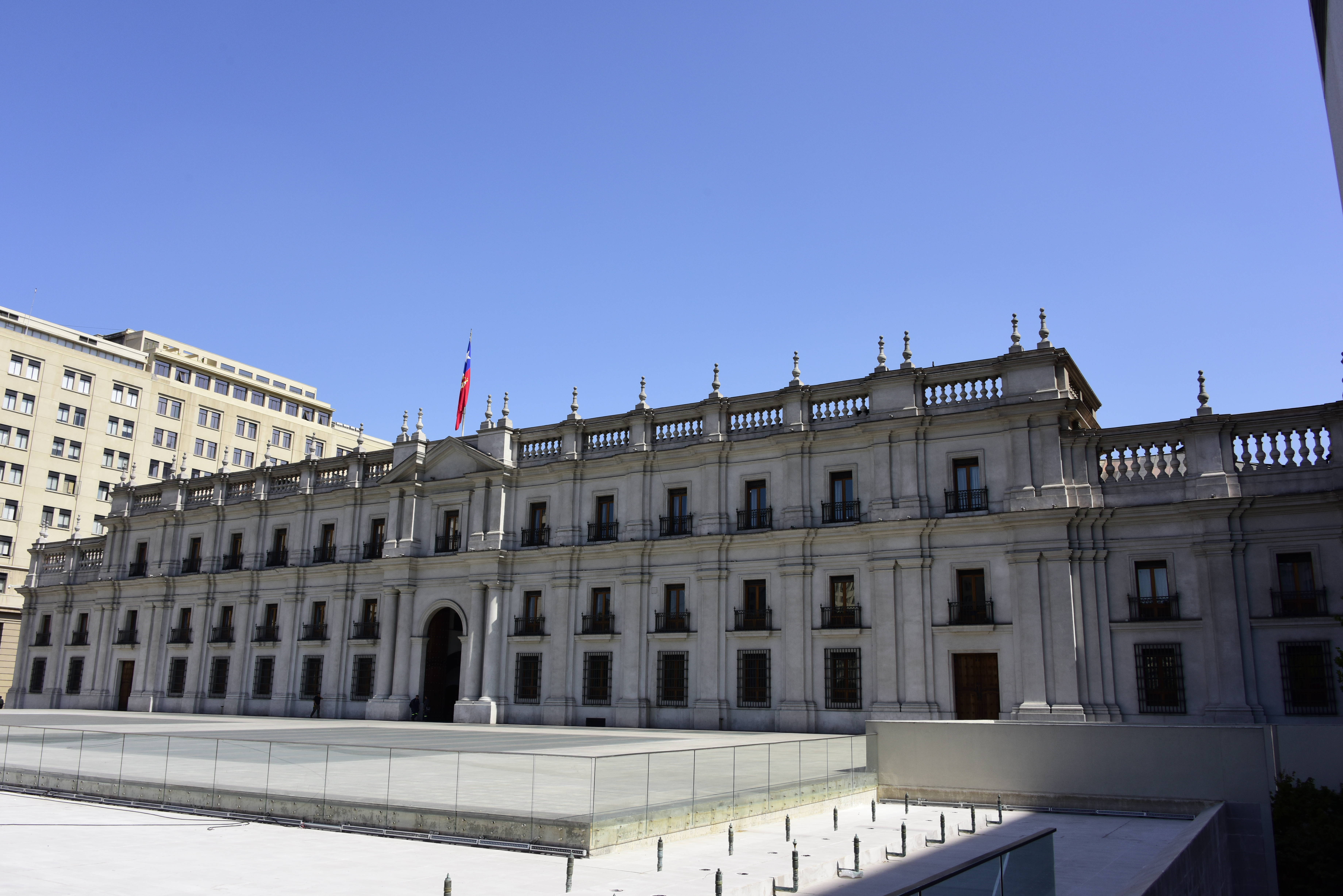
Presidential Palace today
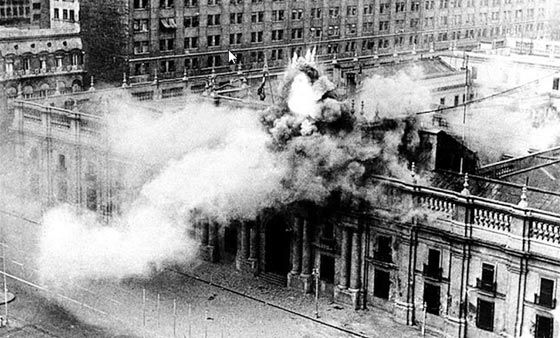
We started our tour at the Presidential palace. You may recall that after 40 years of democracy, Salvador Allende – a Marxist, narrowly won a three-contestant election and for three years, took the country down a socialistic path. With the help of Nixon and the CIA, Augusto Pinochet came to power after a violent coup d’état.
Presidential Palace September 11, 1973
The Chilean Air Force bombed the Presidential palace. Imagine our AF attacking the White House?
Pinochet was a brutal dictator who in addition to imprisoning, torturing, and killing perceived dissidents, he “disappeared” people in an attempt to hide from world attention. Missing people were known as “desaparecidos” and numbered in the thousands. But Pinochet is also credited with fixing the economy with the help of Milton Friedman and economists from the University of Chicago. After 17 years in power, Pinochet allowed a referendum, expecting to win easily. But 56% voted “no” (there was no other candidate) and he eventually stepped down. Many we met in the country felt conflicted – great progress at the price of human rights and many lives.
In any case, Santiago is a beautiful, vibrant city. Quaint and funky neighborhoods, a modern downtown, an attractive historic section, wide, tree-lined avenues, and surrounded by mountains. We enjoyed it a lot.
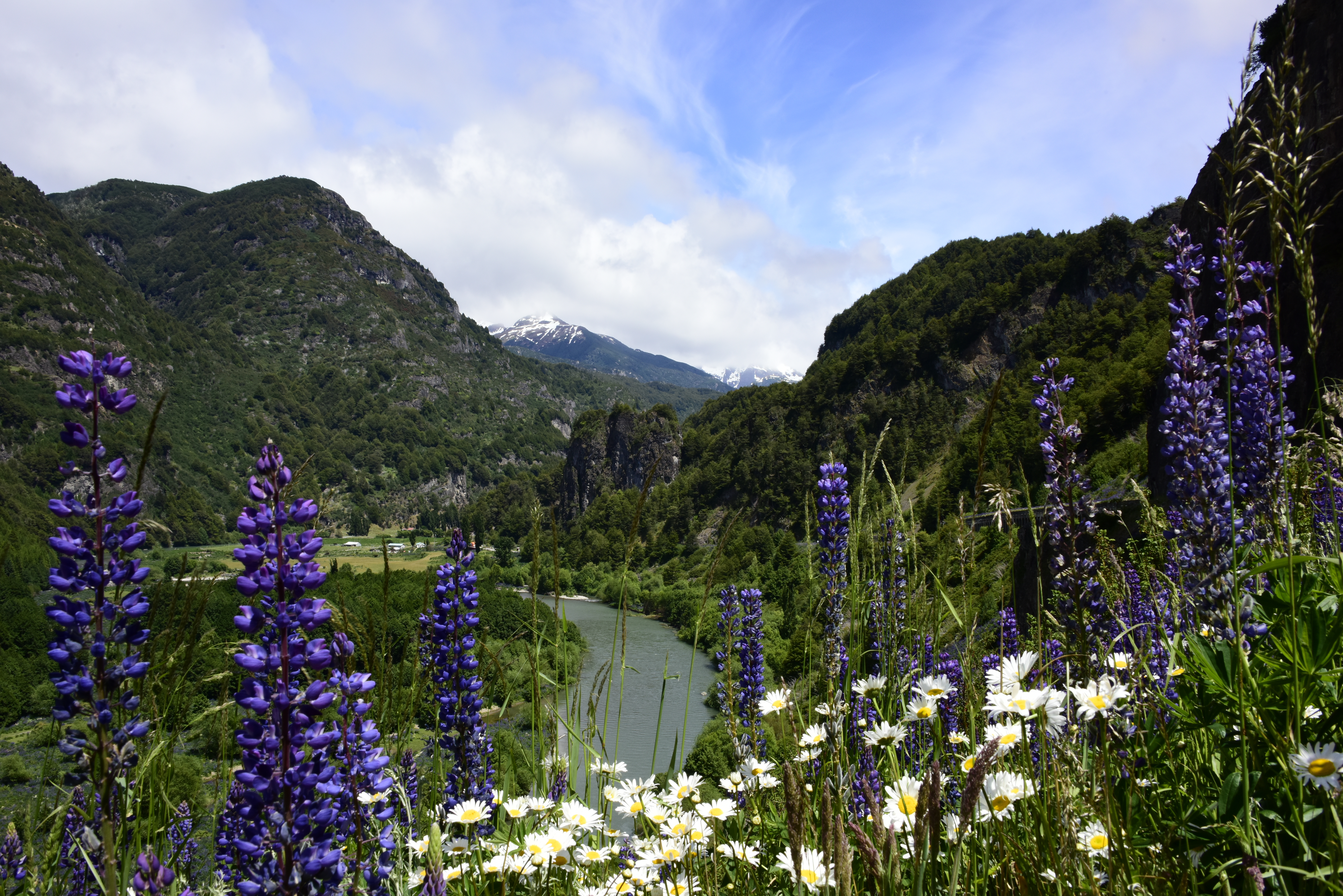
From there we wandered down the rest of the west coast of Chile and through the beautiful fjords and finally arrived in Ushuaia, Argentina – the jumping-off post for most trips to Antarctica.
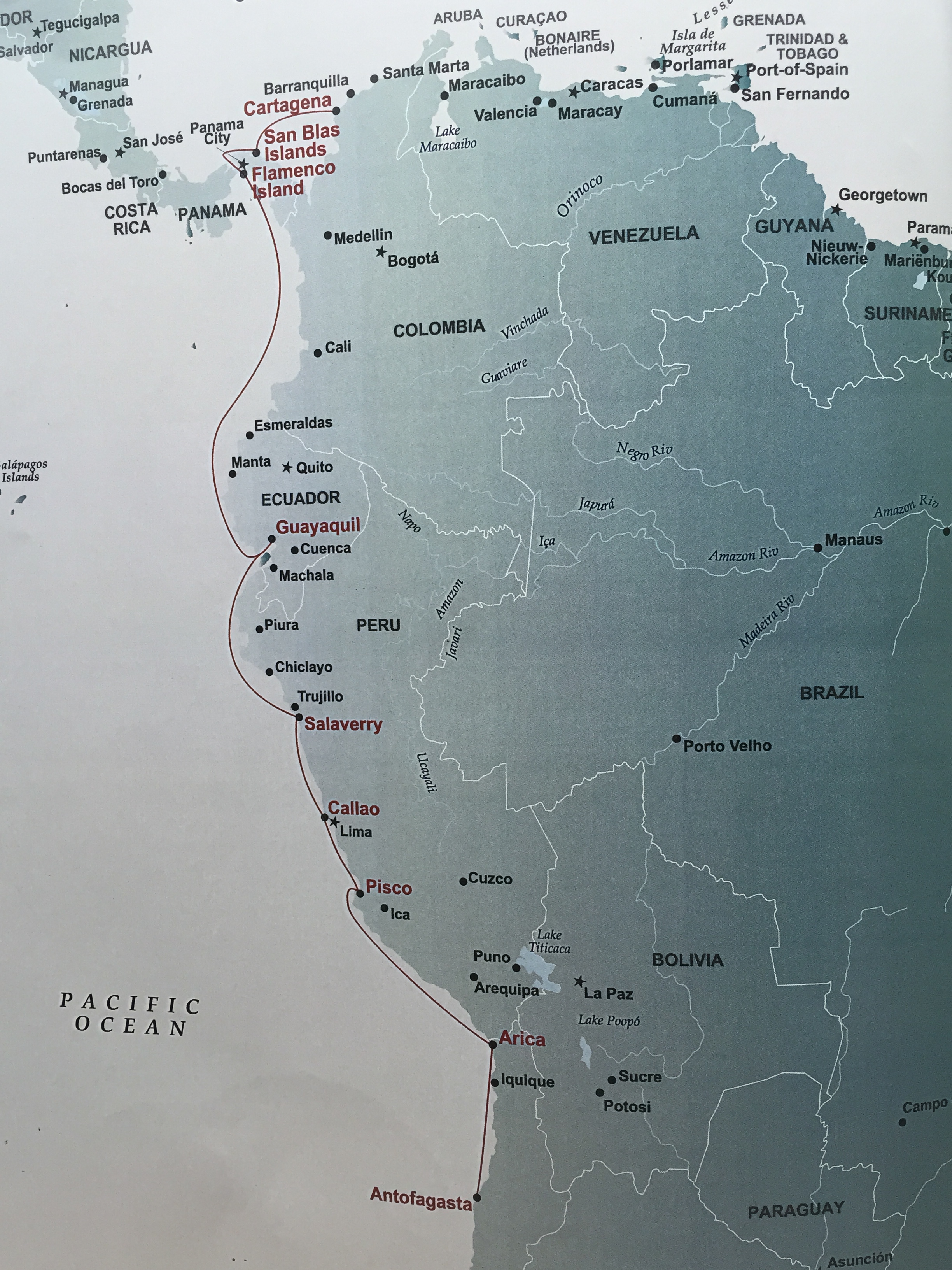
We continued down the west coast of South America into Peru and Chile. But before I start – it’s time for the next “bar bet” opportunities.
1) Name the CONTINENT that contains the driest area on earth in terms of annual precipitation.
Wrong.
2) Name the country with the second driest area historically.
Wrong again!
The first is a bit of a trick question. Dry Valleys in Antarctica supposedly hasn’t had precipitation in 2 million years. Don’t ask me how we know that, I thought there was one sprinkle in there somewhere. The second driest area is Atacama, Chile with an average annual rainfall of .03” – THEN comes Libya, Egypt, then Peru. (But be careful with that second bet – this October, El Niño caused record rainfall in the Peruvian and Chilean deserts, creating a rare blanket of flowers.)
I guess I slept through the relevant geography class, but I learned that much of the western coast of South America is desert, hemmed in by the Andes Mountains – the second-highest mountain range after the Himalayas. The coast actually looks a bit like that of Namibia, Africa. The combination of desert and mountains creates some odd climates. Lima, Peru is cloudy for 9 months of the year. Santiago, Chile is in a bowl between mountains and often is hazy from trapped pollution. Unless you go up or over the mountains, the weather is not at all what you’d expect for a coastal region at the equivalent latitude of the Caribbean. The temperature throughout the region is consistently moderate – often cool if the sun isn’t out.
We had a nice visit to Lima, Peru and found some great ceviche. In Pisco, I was introduced to the famous “Pisco Sour” drink – yummm! Pisco is a strong liquor, a bit like vodka, made of grapes by the early missionaries as they were not allowed to make wine – the law of unintended consequences. We also took a wild ride over the desert dunes and had a local meal under the stars. I then went on a flight to see the famous Nazca lines. In an area of 200 square miles, thousands of lines and hundreds of drawings – some over 800 feet wide – were etched into the desert by removing a surface layer of red rock 2000 years ago. While theories abound (including one that space aliens were involved because one of them looks like an astronaut), there is no consensus. Debra passed because the flight was rumored to include wild left and right banking to let those on both sides of the small aircraft see the figures – but it wasn’t that bad (or good depending on your thrill quotient).
Dinner in the desert
Peruvian desert
Nazca lines
We finished the month with a spectacular Thanksgiving dinner amongst good friends on our front deck as Debra tried out our new kitchen for the first time. Thank goodness the appliances all worked (except for the dishwasher – ouch!)
After Panama, we headed down the west coast of South America and stopped at Guayaquil, Ecuador. This small country struggled for a decade from a great recession in 1999. In 2007, Rafael Correa, a leftist economist was elected President and aggressively reshaped the country. He pushed back against U.S. influence and befriended Cuba, Venezuela, and China. When Hugo Chavez called George Bush a devil, Correa said that was unfair to the devil. After bullying banks, the IMF and oil companies into restructured contracts, he applied the gains to health, education, subsidies for the poor and needed infrastructure. As a free market capitalist, I hoped he would fail – but I must admit, he’s done a lot of good things for the country. It may not be sustainable, especially with the drop in oil prices, but the results impressed me. Most love him, but with two changes in the constitution to provide for a Putin-like opportunity to be “president for life,” a wariness of his intentions is building.
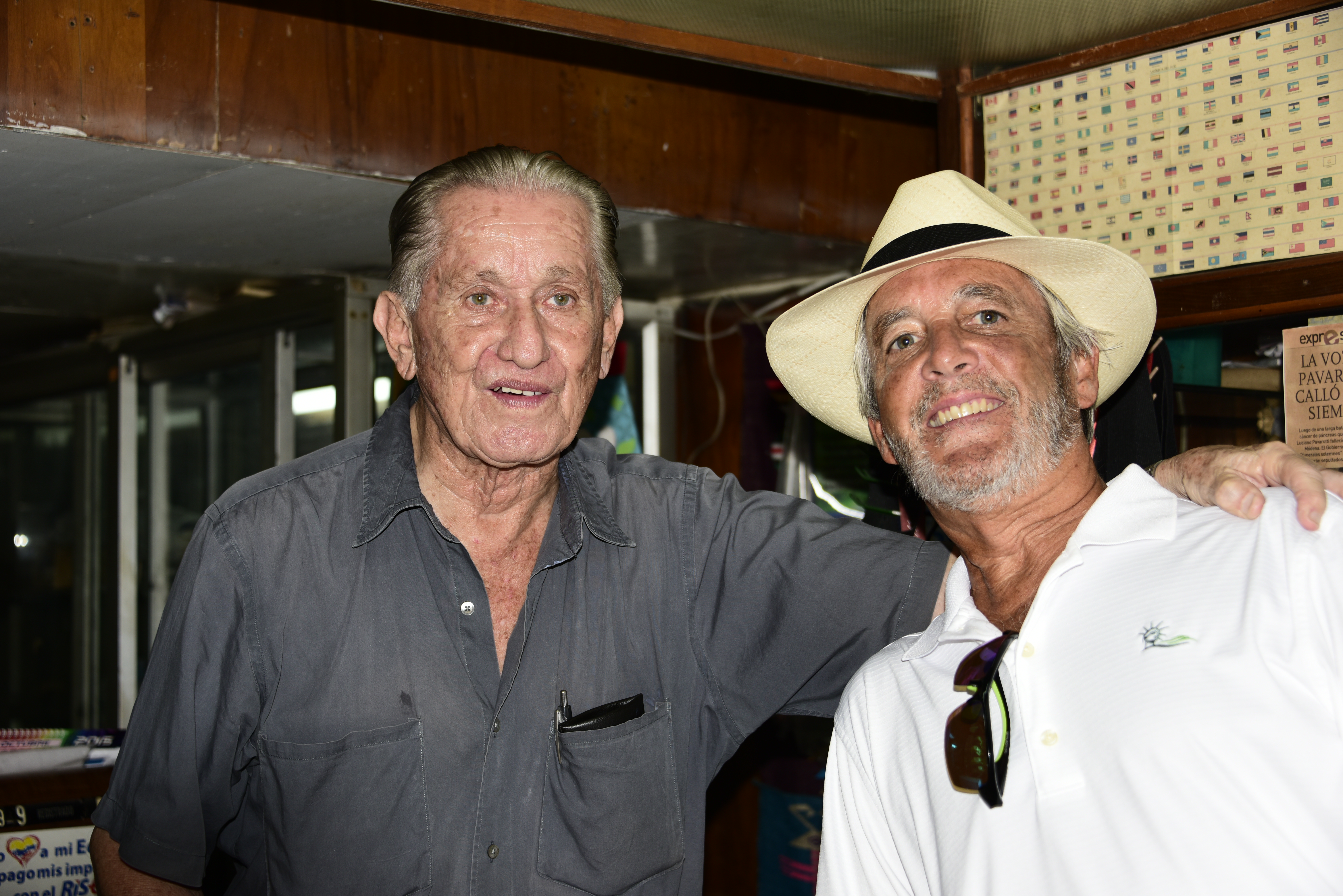
Mr. Barberan, famous Panama hat maker
We went to an 85 year old store famous for their Panama hats. Why in Ecuador, rather than Panama? Actually, all “Panama hats” are made in Ecuador. Woven straw hats for shade go back 2000 years in Ecuador. Only when Teddy Roosevelt was seen wearing one when visiting the Panama Canal, did they become known as Panama hats. The best ones use a very fine straw weave and can actually be rolled up and put in a narrow box.
From Guayaquil, we flew to the capital of Quito, which was our staging area for a 3 night journey into the Amazon forest. At 9,350 feet above sea level, it is the second highest capital in the world (after La Paz, Bolivia). As you would expect, the surrounding mountains are beautiful. The city itself sits beneath an active volcano and the detailed evacuation plan was a bit disconcerting. Six churches grace the old town center as different Catholic missionary orders seemed to be in competition. The Jesuits and their gold won hands down!
Quito, Ecuador
Quito Church
Jesuit Church
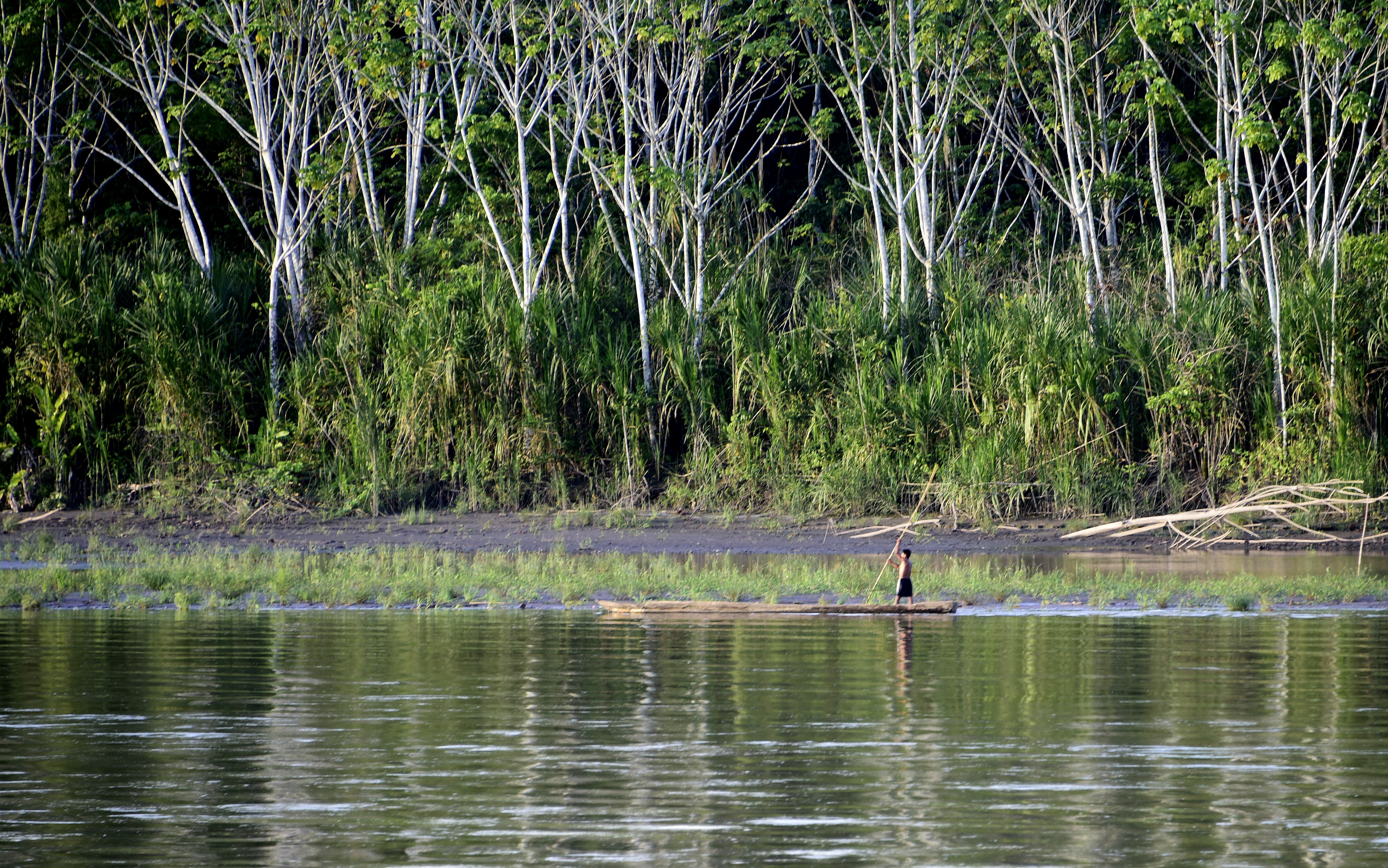
The Amazon Rain Forest
Though the Amazon River doesn’t actually flow in Ecuador, but the Napo is one of its main tributaries in the Amazon basin which is spread over three countries. Home to 600 species of bird, 170 species of mammal and 120 of reptile, the Ecuadorian Amazon Basin is said to have more species than all of North America.
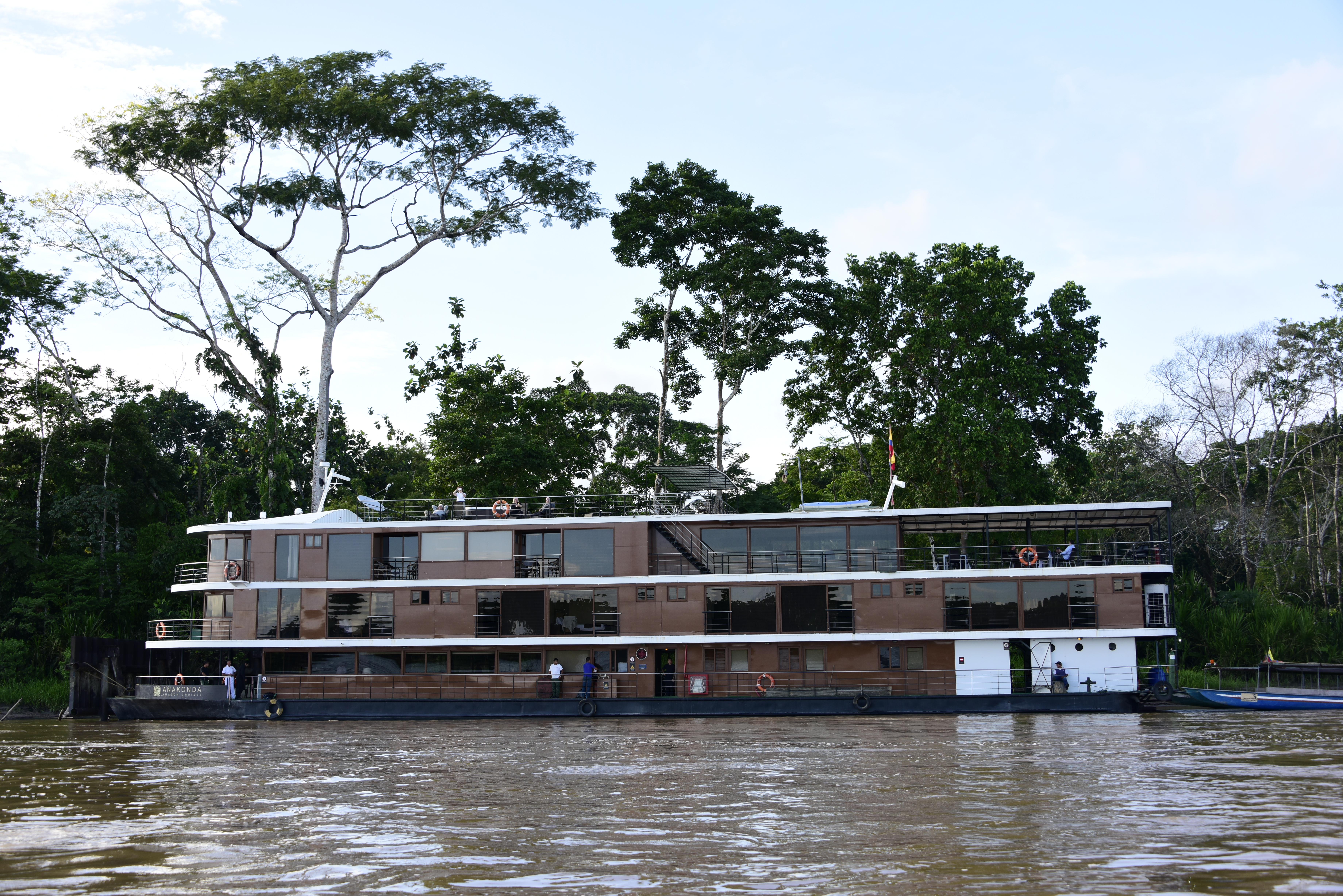
The Anakonda river cruiser
Our trip began with a flight to the village of Coca where we boarded a motor boat to take us the The Anakonda, a “luxury river cruise boat.” It’s amazing what can be done with marketing photos these days. It was better than a tent for sure, and the crew and guides were great, but it’s not quite like our ship!
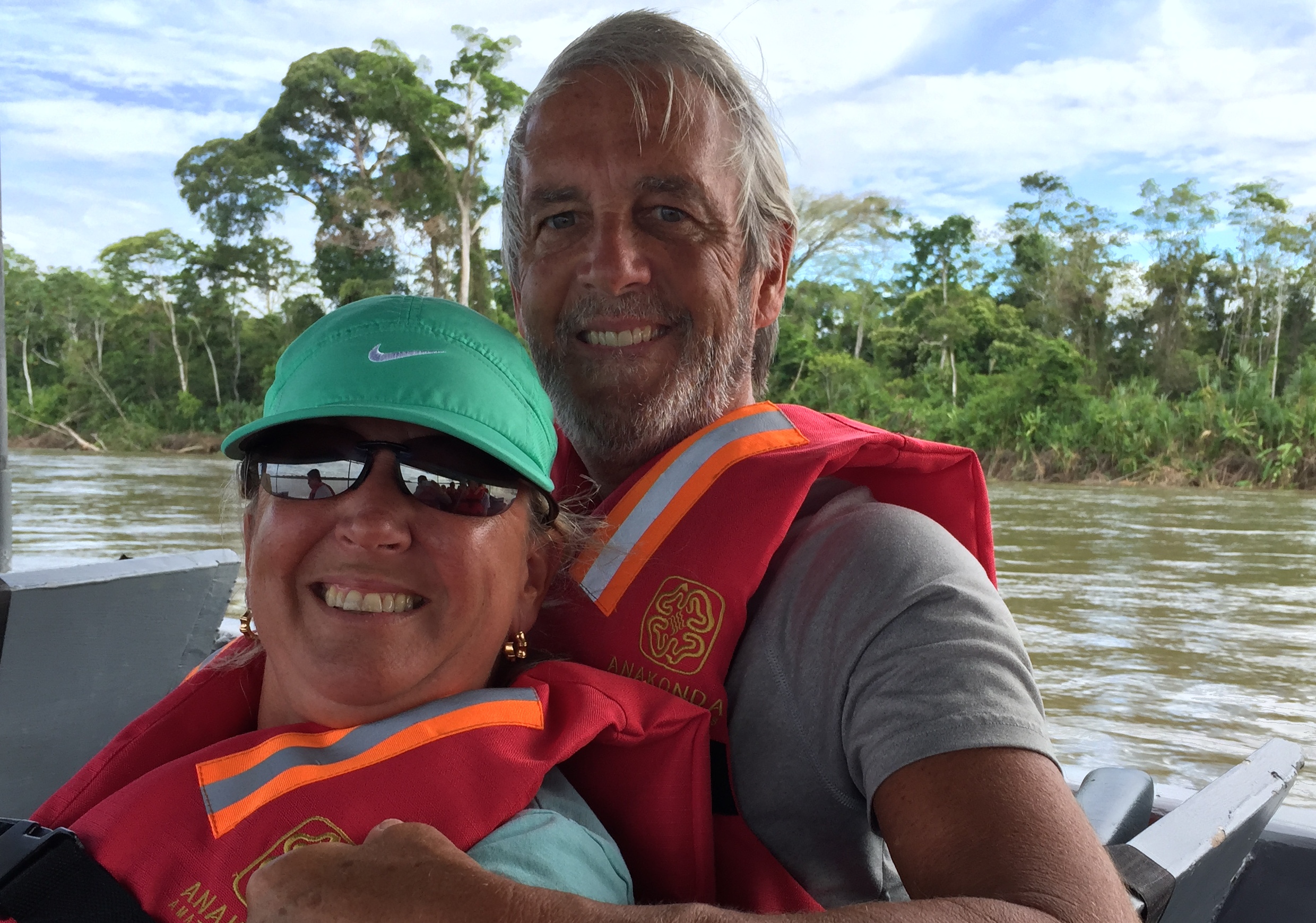
The Explorers
By now you know our idea of the great outdoors is a cocktail with an parasol on a beach facing turquois water. But we did enjoy the two days of exploring and learning about the amazing and adaptive ecosystem of this area. Our guide Avel, was a bright young native who was given the chance to study in the U.S. But he returned to live with his family and is committed to preserving their way of life. We also visited a community center for the indigenous people and learned a lot about their culture and foods. We also caught and swam with the piranhas (a meat eating fish) and ate some lemon ants. Avel demonstrated how he eats a delicacy for them – a big, fat, live grub. ONE of our group took on the challenge – not me this time! Watch the video below if you dare.
The trip home was a bit more eventful than planned as our two engine motor boat broke down as we were rushing to make our flight out of Coca (not a place you’d want to spend the night). Also in the video. All in all, an enjoyable outing – but not something we’d do again without parasols.
After New York, we went home to recover and in late October we headed to the Caribbean to rejoin the ship. We invited good friends Rob and Rachel to join us from Seattle.
We stopped for a couple of days in the Dominican Republic. This is only our second time there, but we continue to be impressed with their progress. It’s so sad to see the disparity between the DR and Haiti, their island neighbor. We stopped in Casa de Campo, a high-end resort area noted for its villas, beaches, and golf courses. We got to play Pete Dye’s “Teeth of the Dog” which is always among the top 50 in the global rankings. It was beautiful and very playable – not like some courses that pride themselves on destroying your pride.
Rob and Rach at Le Circque, DR (excellent)
Teeth of the Dog CC
Beach Day
From there we sailed to a couple of small islands for “beach days” (our favorite), and then down to Cartagena, Columbia – one of the early Caribbean settlements. A great old town, with plenty to see, do, and eat. Rob, Rach, and Debra were glad to have me along with my scruffy beard and black eyes – they felt like they had a bodyguard. We also joined the festivities on Halloween on board, with Rachel acting as our make-up artist.
“Day of the Dead” night
Cartagena torture museum
The bodyguard
Cartegena
Finally, we headed to Panama for the crossing of the canal. Time for your test questions:
When you sail through the canal from the Atlantic (Caribbean) to the Pacific, in which direction do you go?
We all know the canal has numerous locks to change water levels (at the beginning, 3 locks take you up 85 feet, and at the end, 3 locks lower you to the Pacific. Since “sea level” is about the same on both sides, why didn’t they just dig a simple trench like the Suez Canal?
Think about it…
I often wondered why they needed locks, but never bothered to look it up. A simple trench was one of the options. In fact, in 1882 Ferdinand de Lesseps, the French architect of the Suez Canal started a company to do just that. But Panama is volcanic rock, not sand – it has mountains, not a flat desert – and the malaria and yellow fever devastated his crew. They gave up after 7 years.
After the sinking of The Maine near Cuba during the Spanish-American war, it took 66 days for the U.S. to send a warship from San Francisco and around South America to respond. Teddy Roosevelt, who was Assistant Secretary of the Navy at the time, became passionate about building a canal when he became President.
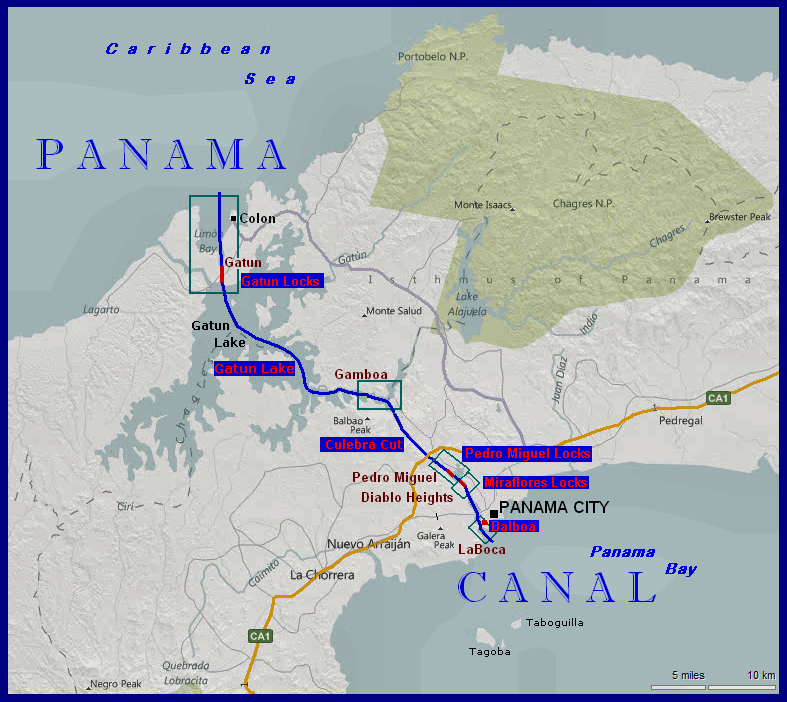
The U.S. design first dammed a large river flowing out of the mountains. This created a huge lake (Gatun) that covered a good portion of the 50 mile isthmus. It is about 85 feet higher than the oceans, but created a ready-made sailing path without needing to dig. The elevation also meant the cut through the continental divide could be 85 feet less difficult to forge. So the dam/lake system reduced the work dramatically, but required a series of locks to elevate the ship from ocean level to cross. Brilliant.
As for direction, going from the Atlantic to the Pacific is generally southeast (see map below). Probably a good bar bet.
The whole crossing takes about 8 hours. Ships are charged by the pound, large ships pay between $100,000 and $350,000. But it saves 8,000 miles from rounding South America.
I took a time-lapse video of the entry and exit locks you might enjoy (30 seconds each).
We had a big family health scare in October. Grandson Beny (8) got an MRI because he was having headaches. Doctors concluded that he had a brain abnormality that likely required surgery. We all went through a roller coaster month that led to a happy ending in a Phoenix hospital, 11 hours before he was scheduled to have a craniotomy. After studying the angiogram results, the experts determined that an arterial blockage existed, but that capillaries had formed around it to relive the pressure. The brain seems to be healing itself! The craniotomy was called off.
I won’t take you through the frightful coaster ride, but want to share what friends, family, and the sports community did to support Ben (and everyone else who loves him). Pat, Sarah, Emma, Jack, and Beny are a huge sports family. In addition to Notre Dame, they are big fans of the Boston Bruins (NHL) and Bridgeport Sound Tigers (AHL) hockey. FYI, Beny wears #6 on his team and hockey teams grow beards during the playoffs for good luck.
When word got out about Beny’s impending surgery, there was a surge of support that spread like a wildfire on Facebook. Friends and family started sending fun pictures with beards and the number “6”, and family friend Joe started a #BeardsForBeny and #6forBeny twitter feed. As the word spread, the response escalated.
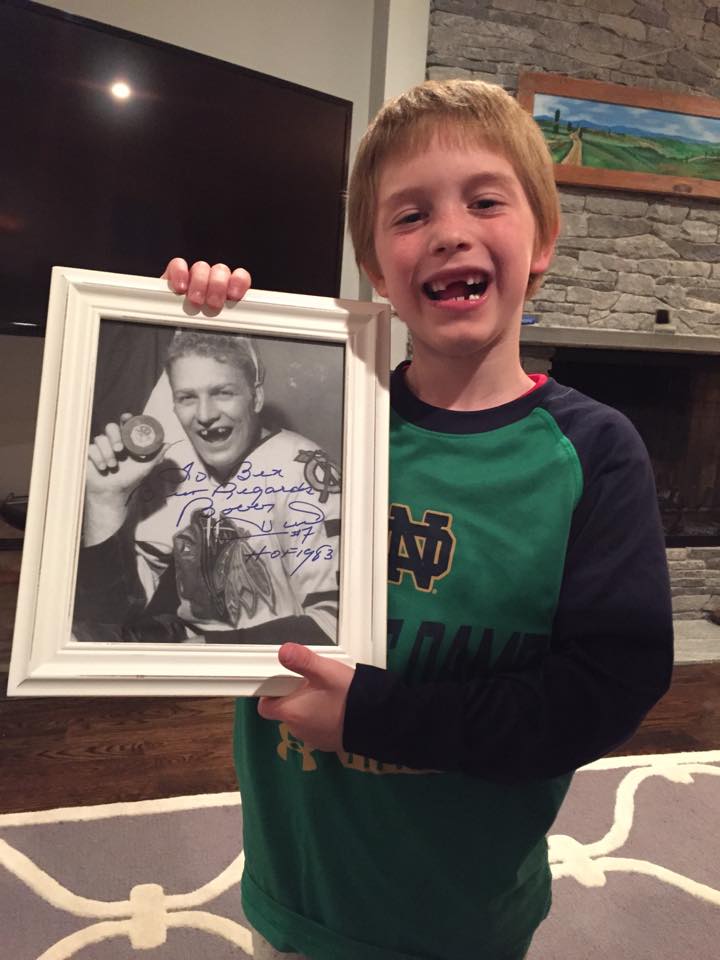
Bobby Hull, “The Golden Jet”
Hockey legend Bobby Hull wrote a note and sent his famous “missing teeth” picture that matched Ben’s current toothless look. Skylar Diggins, ND woman’s basketball great sent a video clip encouraging Beny. Former superstar goalie Mike Liut (Pat’s childhood idol when he was with the Hartford Whalers) sent a nice note and photo. Mathias Farley, captain of the Notre Dame football team sent a picture flashing 6 fingers. The entire pee-wee hockey league in his home town wore #6 on their helmets. The Bridport Sound Tigers invited Beny practice with them. When he was released from the hospital in Phoenix, the owner of the NHL Coyotes invited Ben and his parents to the locker room and the owner’s box for a game. The local news Channel 8 did a feature on him, and so did Fox Sports – with a number of cities around the country picking it up (I saw Boston and Indianapolis, but I’m sure there were more.) Links at the end of this blog post.
I can’t possibly list everyone who sent their best, but it was overwhelming just monitoring Pat’s Facebook feed. I think it helped us all get through a nerve racking month.
But if there is ONE star that Beny is most crazy about, it’s Patrice Bergeron of the NHL Boston Bruins. Much to Beny’s amazement, he got a phone call from Bergeron. Ben said “I always cheer for you.” Patrice said – “No, I’m cheering for YOU”! The next night, Patrice texted a picture from the locker room right before his Tampa game.
Beny said he felt like a king. “We got this” he said.
Turns out he did.
Beny takes a call from Patrice Bergeron
Excerpts from Pat’s final post on the subject:
“The power of FAMILY, of FRIENDSHIP, of COMMUNITY, of TEAM, of HOPE, of PRAYER…We believe the power of all these things has not only helped us arrive at the best imaginable outcome, but it has helped us to grow in extraordinary ways. We’ve shed a lot of tears recently, but today, we are shedding tears of JOY.…We are grateful beyond words and feel so blessed to be surrounded by such great people in our lives. The overwhelming love, support and prayer absolutely helped us through the feelings of helplessness and fear. “We got this.”
Love and big thanks to all,
Team Berges. #grateful, #6for Beny #beardsforBeny”
Take a look at a sampling of the pictures of support:
This slideshow requires JavaScript.
Most amazing was the support of Beny’s sister Emma (16) and brother Jack (12). Despite all the attention going Ben’s way, and the worry they shared – they remained strong siblings. I’m sure it was hard to stay focused and continue their lives as if everything was normal. In addition to school, Emma was playing field hockey for the first time in her life – and won the “Warrior” award by a vote of her peers. Jack was named the sole Captain of his hockey team, despite being the newest, and youngest member. Congratulations to two important players on Team Berges!!
Brother Jack, old for his 12 years
Sister Emma, the warrior!
As for me, I thought I’d do my part and start a beard. I thought it would be fun to take a picture every day to send Beny a “time-lapse” view of the progress. On about day 5, I was kicked in the face playing goalie in a soccer game (by my defenseman) – and no, I didn’t stop the goal. So I now have a sequence of photos showing the progression of a bruise when a 66 year old tries to take on kids. If you’ve just eaten, avert your eyes. #BlackEyeForBeny
Thanks for all your support – we have a new appreciation for health, family, and friends.
After the cold and fog of the last week of the Greenland Expedition, we spent a night in St. John’s, Newfoundland – a cool, live-music town before returning home to enjoy the final weeks of a glorious Connecticut summer and the beginning of the fall.
At the end of September, we rejoined the ship in Boston and had an early Thanksgiving dinner with 20 of our 27 family members. Having been to Boston many times, I didn’t even take one photo off the ship, but I still think it is one of the most beautiful cities in the world on a blue-sky day. The weather was perfect and it was great to see so many of the kids together.
The ship then stopped for a couple of days in Portland, Maine. When I was growing up, my paternal grandparents had a small place on a small island just off of the coast. Every year, my parents took us for a week’s visit (up to 6 kids eventually). I hadn’t been to the island in over 43 years, and I was anxious to visit and show Debra around. We took the ferry out and were graciously hosted by my aunt Nancy, who still lives on the island – though in a different house. She took us around the island, which has hardly changed. She even got us in to the old homestead for a tour. What memories the whole day brought back – swimming in the frigid ocean, clamming, picnics on the rocks, exploring old World War II fortifications, fresh lobster, the kerosene stove, and waking to the smell of grandpa’s cigar in the morning. And for the first time, it occurred to me that 8 of us descending on their tiny house with no indoor plumbing (in the early years) must have been a stressful time to my aging grandparents. But if it was, they never showed it. Fond memories – thanks Nancy!
After Portland, the ship headed south to New York City ahead of schedule, trying to get to safety as Hurricane Jaoquin was bearing down on us. Fortunately, the storm veered out to sea and we had a week of spectacular weather docked on the Hudson River at 53rd Street. Since we were early to NY, we didn’t have a plan for Sunday night – a relatively quiet time. But friends Joe and Danielle took us and our guests Nick and Sar to Lavo for dinner. Every Sunday they do something funky there. At about 9:30 they put on a wild circus-like show and everyone ended up with clown gear and dancing on the tables. It was a real hoot. When we came back to the ship late at night, the security and immigration people couldn’t hold their “tough guy” looks. Thanks Joe!
Six months ago, we sent a “save the date” invitation to about 45 friends for a dinner party on board in the city. We also booked Tangled Vine, our favorite cover band to play on the top deck of the ship. We were thrilled that almost everyone we had invited accepted and made it, despite it being in the middle of the work week. The hurricane threat had me a nervous wreck, but the weather couldn’t have been better. It was so much fun seeing so many friends together – it was like a wedding without the in-laws! But like a wedding, time flew by, and we felt we didn’t really get to visit enough.
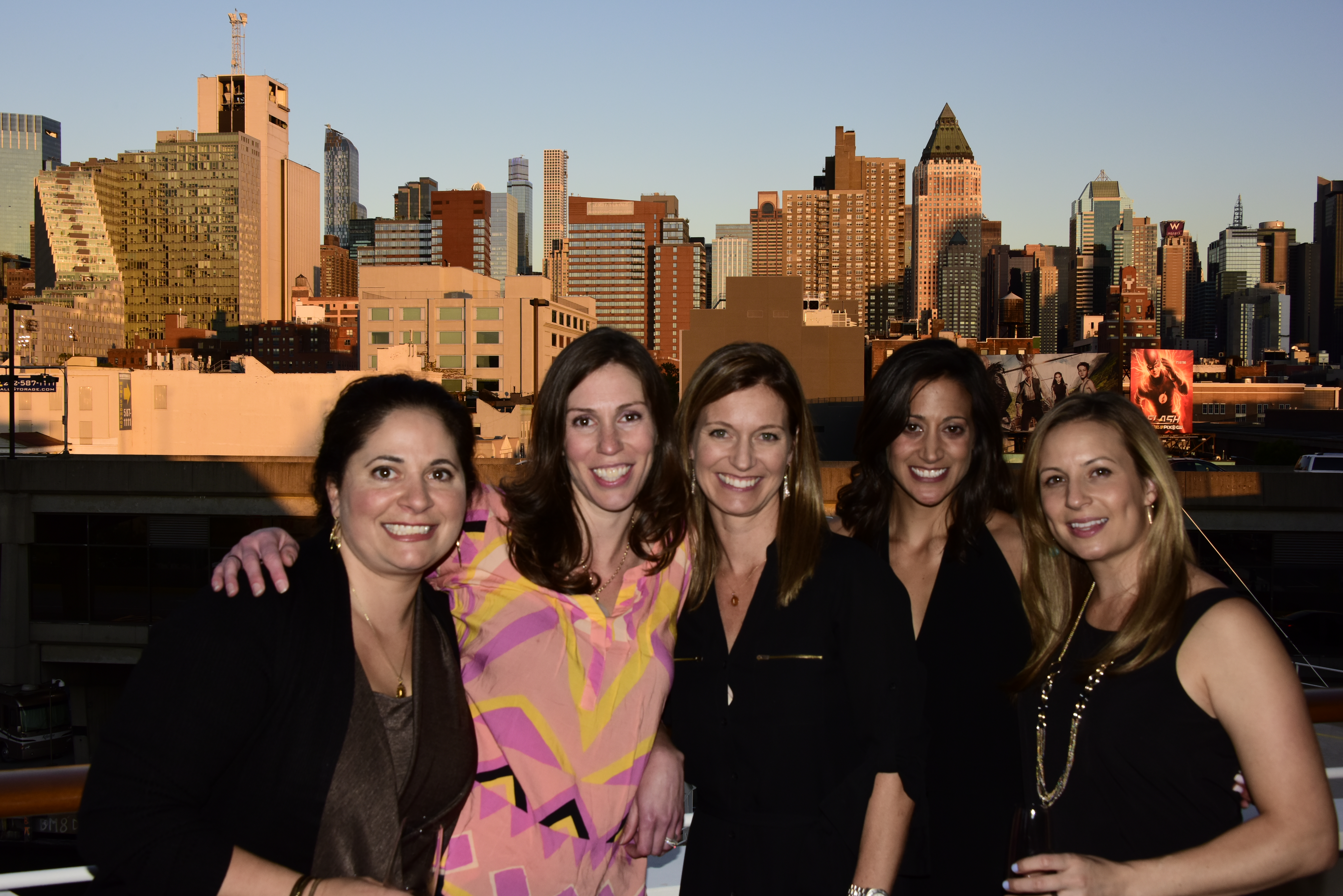
We were especially happy that the “Lori gang” all made it, though none are local anymore. Lori was our trainer when Debra and I first got together 9 years ago in Stamford, where neither of us knew anyone. She not only became our best friend, she introduced us to her 4 best girlfriends – and we’ve all stayed close ever since. They were all single, young, vibrant, fun, and beautiful. Now they’re married (all but one if you’re interested), young-ish, busy with 8 kids amongst them, but still fun and beautiful! What great times we had together – it was such a treat to see them again.
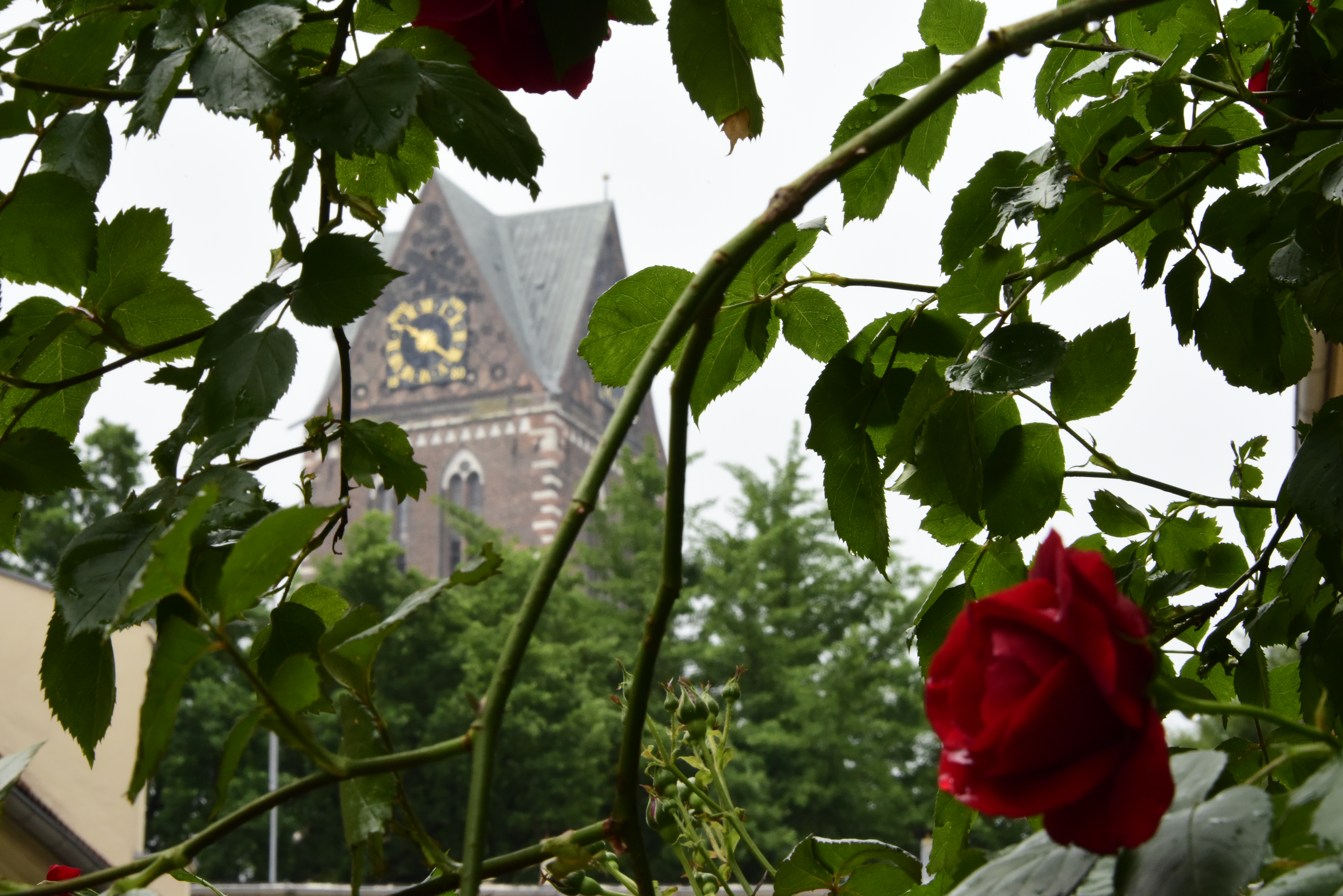 We finished May with a visit to Hamburg. It’s a beautiful city, because it was almost completely rebuilt after World War II bombing. The city surrounds a lake about the size of central park which makes it particularly scenic on a summer day.
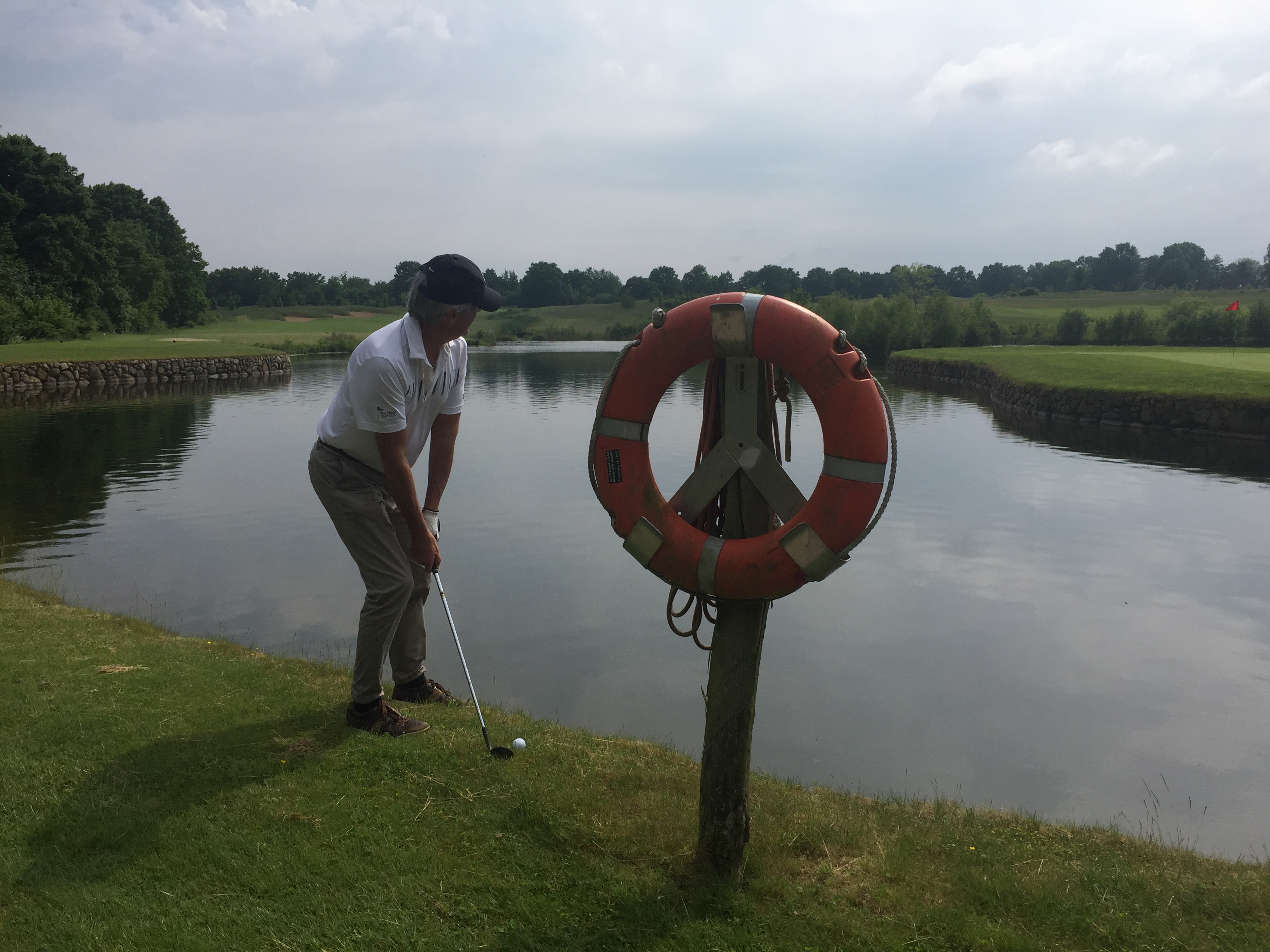 We enjoyed a day of golf at a challenging course. Debra’s been playing a lot more as she enjoys seeing the differences among various countries. I thought it was funny they had life ring next to the water, but I suppose it makes sense.














 Antarctica, even without ice is huge – bigger than Australia and Europe. Even bigger than the continental U.S. and Mexico combined! I sure didn’t know that. We also had an outstanding geologist on board who explained the amazing data we’re able to gather from this area. At its maximum, the ice here is almost 3 miles deep and millions of years old! By drilling and taking core samples, modern equipment has been able to determine temperatures and air quality back 800,000 years so far. We are now able to assess the compressed air bubbles with such precision, that they can detect when we added lead to gasoline for cars (1924)!
 Global warming? Yes, we’re in a hot cycle that has repeated about every 100,000 years in the last 400,000 years. And as sun people, Debra and I prefer that to being in an ice age. While temperatures are at about the same level as the last 4 hot cycles, the CO2 level is dramatically higher than prior peaks. So is our current global warming a natural cycle? Yes. Is human activity raising CO2 levels and likely to influence global warming further? Probably.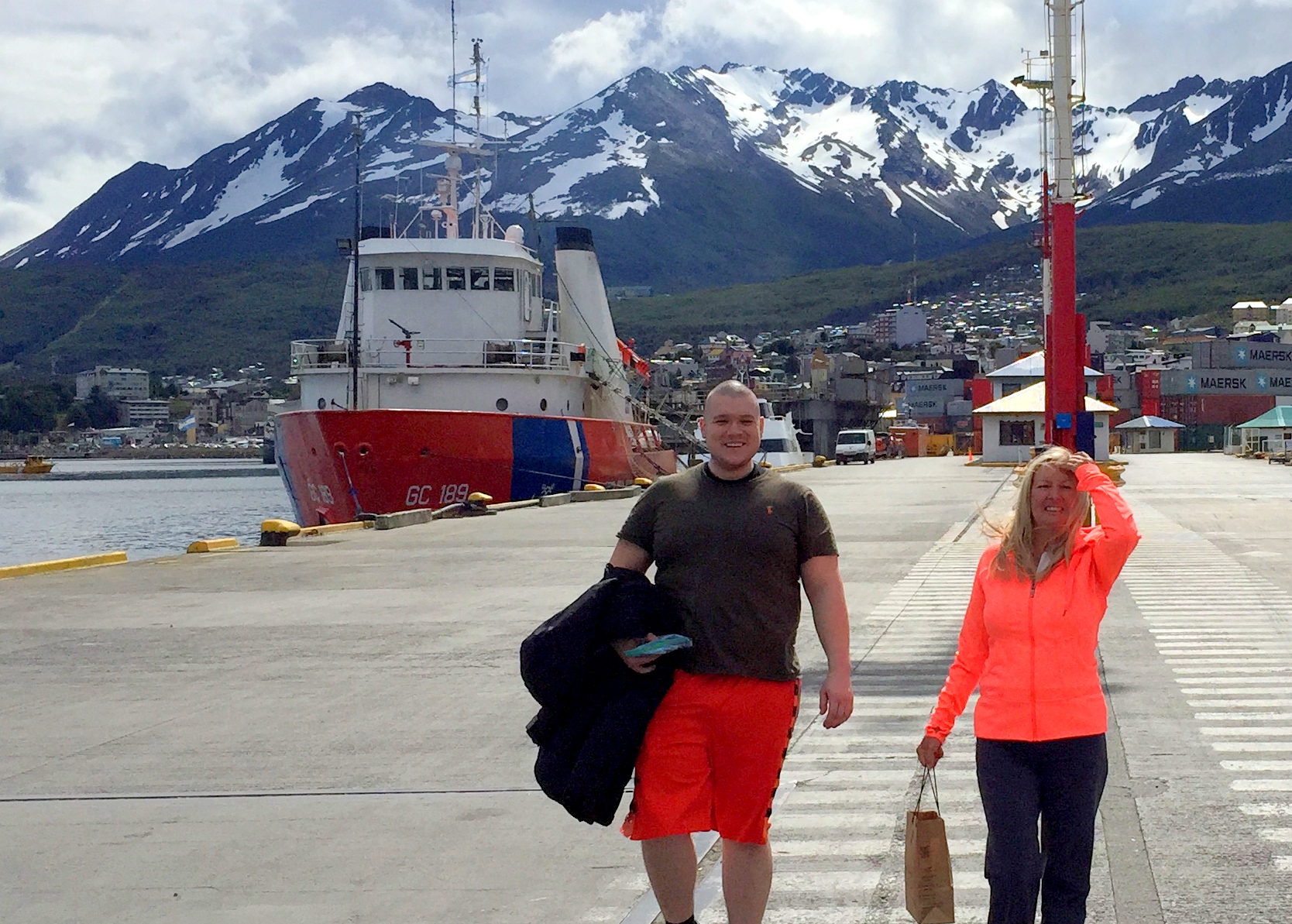














 D & D Adventures