We left our friends Gerard and Francoise in northern Norway while they continued on the ship for an expedition to the Svalbard archipelago and the southern limit of the Arctic Sea’s ice. How far north you ask? 500 miles from the North Pole!
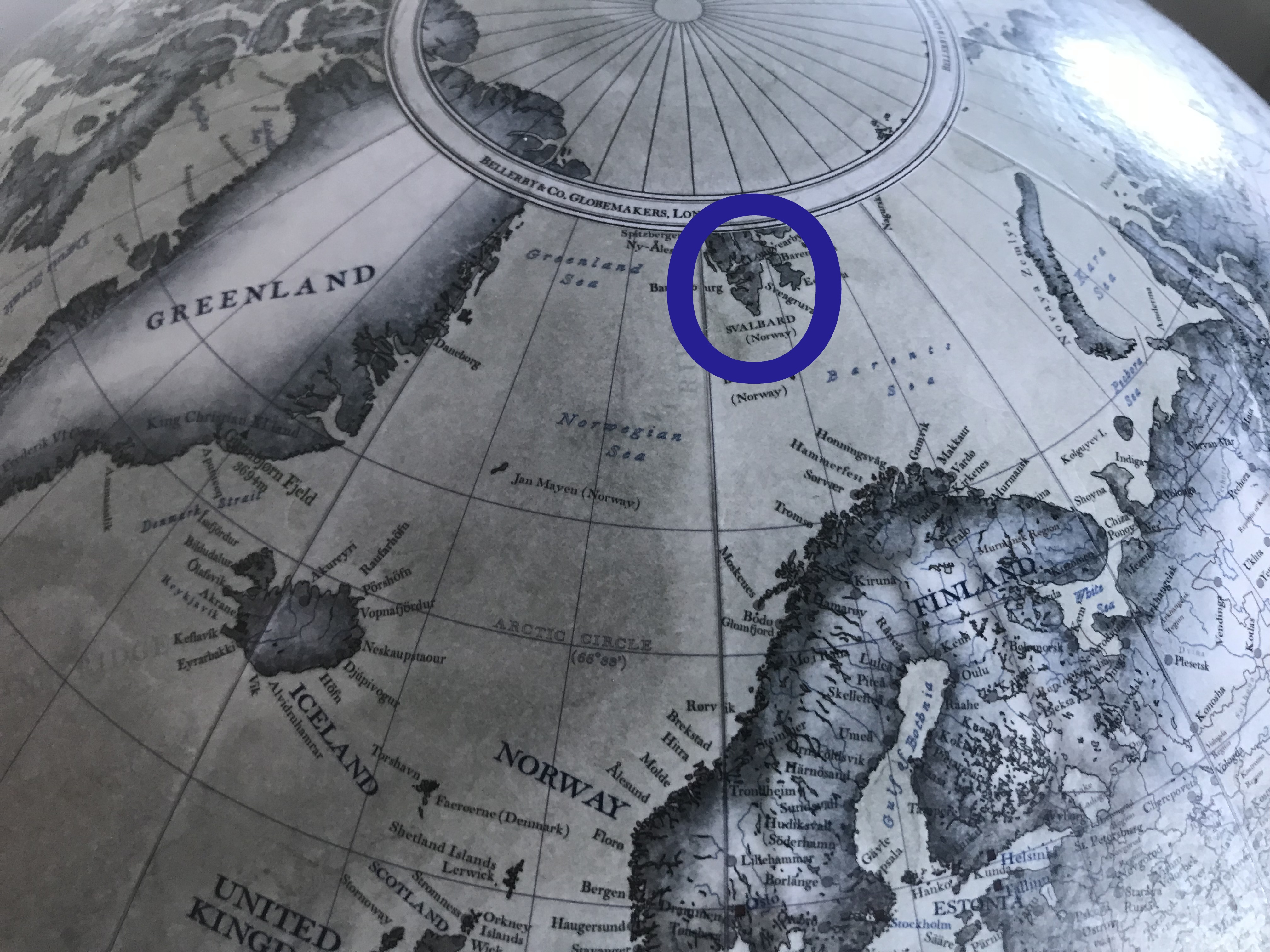
Svalbard Archipelago
Having played midnight golf in Norway, I checked my weather app to see what time of night the sun would set in Svalbard when they arrived on August 5th. The app said “August 21!” Svalbard is even further north than where we went in Greenland three years ago. In fact, after last year breaking the Guinness Book record for the farthest south any ship has gone, the ship became the record holder for the farthest north a passenger ship has ever traveled when it reached 82°41´ N.
Anyhow, we left the ship, I made Gerard and Francoise promise to draft an entry for the blog. Cheating? I know. While they documented slogging through the ice and snow, I was laying by my pool with a Coors Lite. But that’s not good blog material – their notes and pictures are.
I’ve taken the liberty to edit and simplify for semi-literate readers (like me). If you want to better understand how pelagic phytoplankton, algae, and copepods contribute to the arctic food chain, I can give you Gerard’s email!
Polar bear’s ecosystem and diet
A complex and delicate ecosystem provides a food chain that supports arctic cod, birds and sea mammals (like seals, walruses and whales)  cohabiting at the ridge of the sea ice. This makes for an open buffet for the polar bears who are so fond of… blubber! Blubber diet is certainly not cholesterol free but polar bears do not care about what the doctors say. They just love blubber. In fact they need it more than anything to build enough reserves of fat if they want to survive the winter.
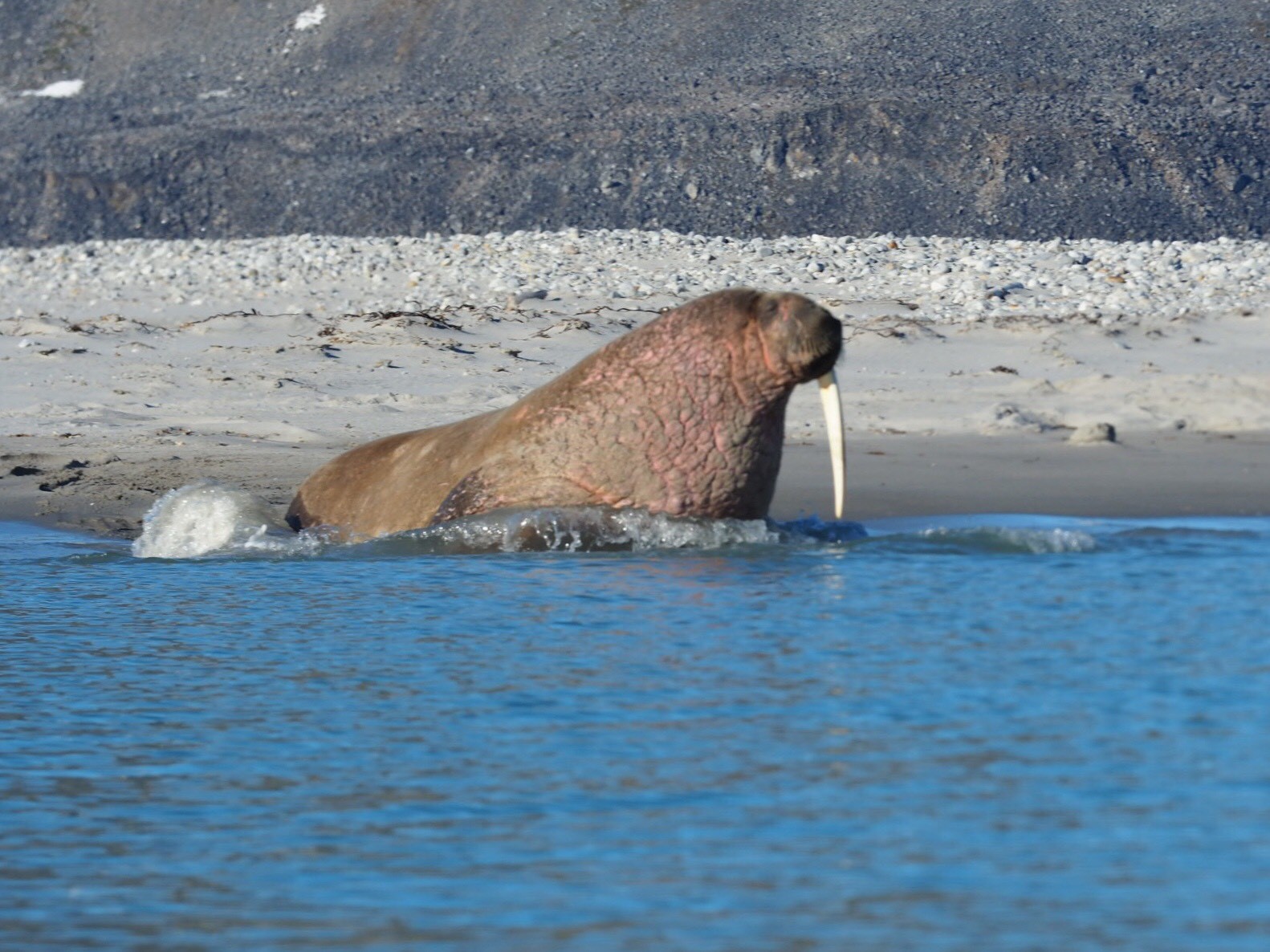 A polar bear is able to eat as much as 10% of its own mass in less than an hour (think about that), and another 10% in the following hours. Looking for blubber, a polar bear will preferably hunt ring or bearded seals but walruses are targets, too, though they are more fierce defenders (due to their tusks.) After killing a seal, a polar bear will eat the blubber only, leaving the carcass with all the meat on it for the arctic foxes and the gulls. A seal a week is enough to help them keep their reserves of fat, but they will kill one every day if they have the opportunity.
A fragile balance
To illustrate how fragile the environment is, just have a close look at the pictures below. The climate would suggest a topography like the barren and arid rocks on the right side of the first picture. But the the area is home to the largest colony of gulls, terns and kittiwakes in the northern hemisphere – nesting high on the cliffs. Their guano [poop – db edit], washed down by the rain, keeps fertilizing the ground thus allowing moss and grass to grow. There were even herds of reindeer grazing peacefully on a rich grass prairie while the arctic foxes were just looking forward to some young guillemot leaving the nest for its first flight… and not making it to the sea. The arctic tern, by the way, flies all the way to the Antarctic every year, travelling 1.5 million miles in a typical lifetime!


We enjoyed every moment of this Svalbard expedition which gave us the opportunity to come close to this well-preserved fauna and scarce but amazing flora. No doubt it will remain forever in our memory.
Thank you so much, dear Dave and Debra!
And thank you G&F for your blog work! Dave
 D & D Adventures