I imagine most of us need to look at a globe or map to figure out where/what Melanesia is. I thought it was what you had if you forgot to buy cantaloupe at the store. It’s a grouping of 4 countries, Vanuatu, Solomon Islands, Papua New Guinea, and Fiji about 1,000 miles east of the northern part of Australia. We visited all but Fiji with a team of anthropologists and other experts for three weeks.
Vanuatu
In Vanuatu, made up of over 80 islands spread over 800 miles, there are over 100 native languages spoken – the highest per-capita in the world. We visited the islands of Tanna, Ambrym, and Mavea. In each case we spent time with tribes that practice “kastom” – the traditional cultural life. Each island had their own dances, dress, and customs that were taken very seriously, not fabricated for tourists. What they all seemed to have in common, was a happy, smiling welcome.

At Tanna, after the welcome dances and music, we went to the top of an active volcano at sunset. Thanks to a strong trailing wind, we were able to experience the frightening power of a mild eruption. Coincidentally, we were there on the night of the Oscars, and the movie Tanna was nominated for best foreign film. Performed and filmed on location with only local people, it was fun for us to watch after just having been there.


On Ambrym, we witnessed “The Rom Dance,” a very unique and secretive ceremony. Aspiring dancers pay large amounts of money (and pigs) to be admitted to the troupe. Then they spend months making heavy costumes and masks out of banana leaves so they can dance for an hour in 100 degree heat. Immediately following the dance, the costumes are burned so the spirits won’t haunt the dancers. The chief and senior dancers wear nothing but a “penis sheath” that left little to the imagination.


Finally, we stopped at Mavea Island for some nice beach time and a visit to the “blue hole” on the Riri Riri River (say that 3 times fast). But we also got to see a performance of the “water women” who make music by slapping, scooping, and splashing water. They can create a wide range of sounds and play the water like a band (see video) – it was fascinating!


Hard to describe the uniqueness of each island, the simplicity of the lives of the natives, and their apparent happiness.
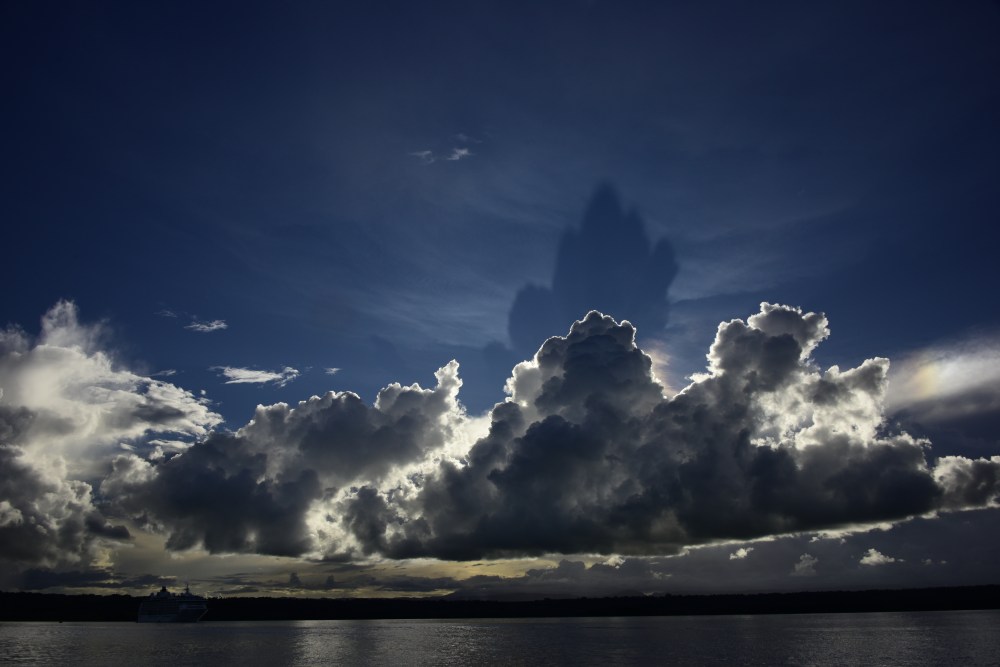
Here’s a short (3 min) highlight reel :
Solomon Islands
Continuing to the west after the Vanuatu are the Solomons, consisting of over 900 islands (though only six of them major population centers). We visited 5 of the islands (Tikopia, Guadalcanal, Marovo, Sabulo, and Gizo) and each had their own unique culture, tribal dances, and personality. Some are rarely visited by outsiders, but all of the locals were excited and welcoming (despite a history of headhunting and cannibalism before the arrival of Europeans).
Guadalcanal was the start of the Allied push against the Japanese in the Pacific. The Japanese, to that point, were “undefeated” in their 10 year march of through Asian. But after Pearl Harbor, the U.S. drew the line at Guadalcanal despite a commitment to focus first on the European theater. A Japanese air field being built on the island was seen to be the potential launching point to attack Australia and control the supply lanes of the Allies. It’s hard to reconcile the peaceful, happy villages we visited with the carnage of WWII.


Papua New Guinea
Finally, we made a few of stops in PNG (Rabaul, Baluan and a couple of others), the western-most country in Melanesia. Man was first thought to inhabit these islands 40,000 years ago and to this day, over 30% of the population lives in a self-sustaining, natural way. Many pockets of people have still never been exposed to the outside world. One of the islands we visited was last visited by an expeditionary ship in 2010.
What most of these countries have in common, is that they are on the Pacific Ring of Fire, the confluence of three active tectonic plates (if three things can conflue). So in addition to cyclones, they are subject to volcanoes, earthquakes and tsunamis. We spent a couple of days in Rabaul, where ½ of the town had been wiped out by a twin volcano in 1997. We drove to the mountains to see a traditional “Fire Dance.” Running through flames in costumes made of husks – guess they want to prepare for the next volcano?


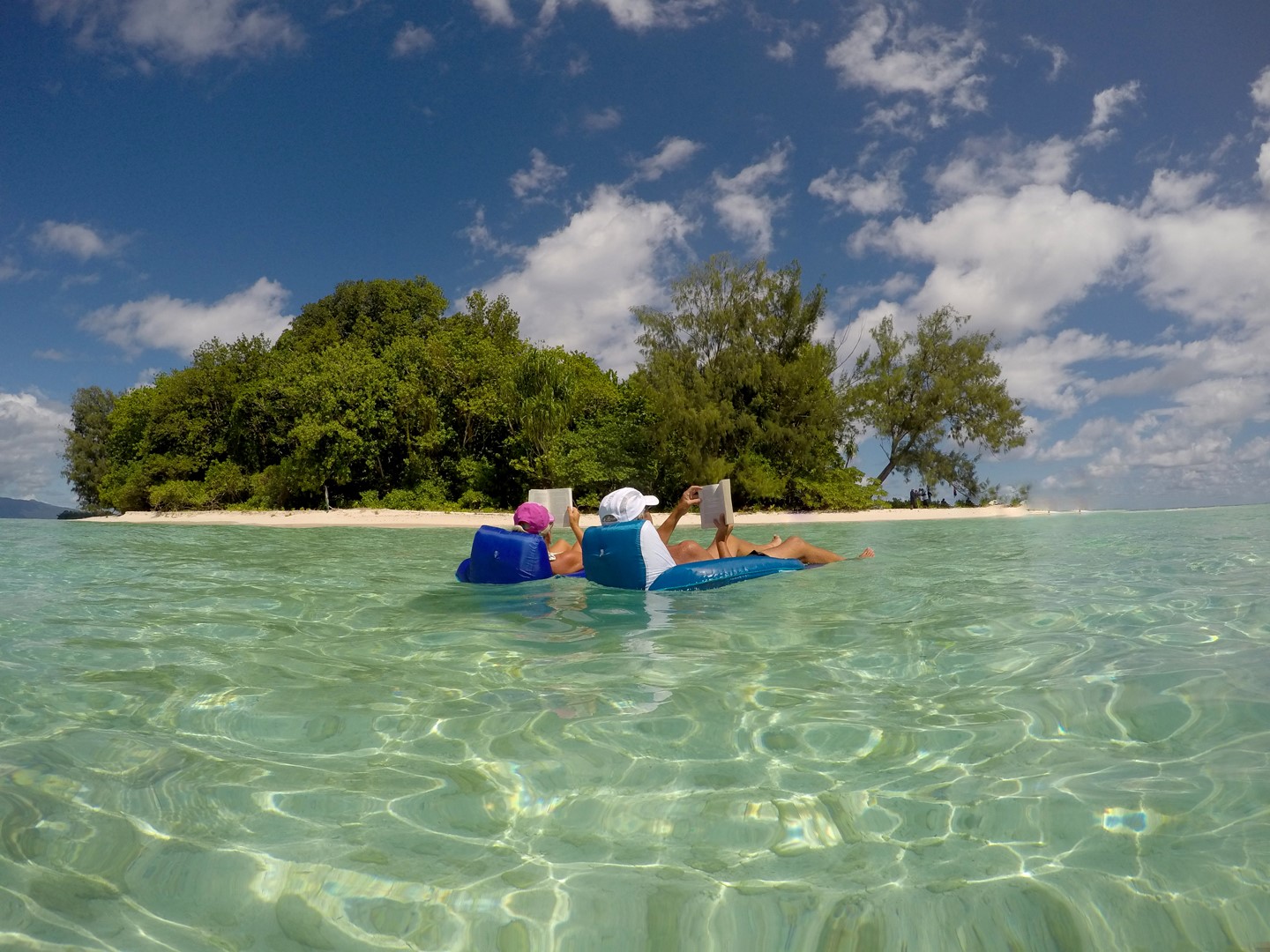
And of course, we had a little beach/floating time.
Courtesy Raul Touzon
 D & D Adventures