We flew from Geneva to the Maldives for a few days to recharge our melanin after cloudy Switzerland. Then we headed for Sri Lanka where we decided to do a bit more of a “deep dive” and took an overland trip with an excellent guide. When the ship was last in India, we missed most of the trip – only visiting Mumbai for a couple of days. We thought Sri Lanka would be similar, so we thought of it as a second chance.
I’m not informed enough to declare that despite its Indian roots and similarities, Sri Lanka is much nicer. But our well-traveled Canadian professional guide did point that out, and I do see it is often debated on websites. Much higher literacy rates, lower population density, health rates that rival Western Europe, less extreme wealth and grinding poverty, better cleanliness and sanitation are claimed by many. Professor Alaka Basu of Cornell University, an Indian woman spells out “Three startling differences between India and Sri Lanka” here: http://dbsjeyaraj.com/dbsj/archives/3754
Anyhow, we had a great trip across the country. We departed Colombo to visit a tea plantation and factory. The current owner is the granddaughter of the founder and has preserved his original home. I’m not a tea drinker, but was fascinated with the finer points of creating green, black, and white teas.


Then on to Kandy, the former capital for a stay in a quaint little hotel and a visit to the Temple of the Tooth, a relic considered to be the most important to the Sri Lankan Buddhist culture. I’ve never stood in line to see a tooth before, but judging the mood of the locals, it was a pretty-important honor.
We then went to the Sigiriya Rock Fortress, or Lion Rock, a UNESCO World Heritage site. As the story goes, a guy named Kashyapa was King Dhatusena’s son by a non-royal consort. In 477 AD, he decided he’d like to be king and walled up his father alive to kill him. (Maybe dad was napping?) The legitimate heir, Moggallana feared for his life (Who could blame him?) and fled to India.
Kashyapa, partly out of concern his brother might go to masonry school and do the same to him, and partly because powerful Buddhists didn’t support his stonewalling (ouch), moved the capital to Sigiriya atop a 660-foot rock formation. He only reined 18 years as his brother did return with an army, defeated him and moved the kingdom back to where it had been.
Never-the-less, the citadel he built is considered to be one of the most important planned sites of the first millennium. Palaces, gardens, sophisticated hydraulic systems, a reservoir and one of the oldest landscaped gardens in the world – all built in less than 20 years (then abandoned until it was discovered in 1831)! No one really knows how the king got to the top of the formation, much less how they built it. But now 1200 frightening steps allowed me (Debra has a bit of acrophobia and it was no trek for her) to see the ruins at the top. Fascinating!


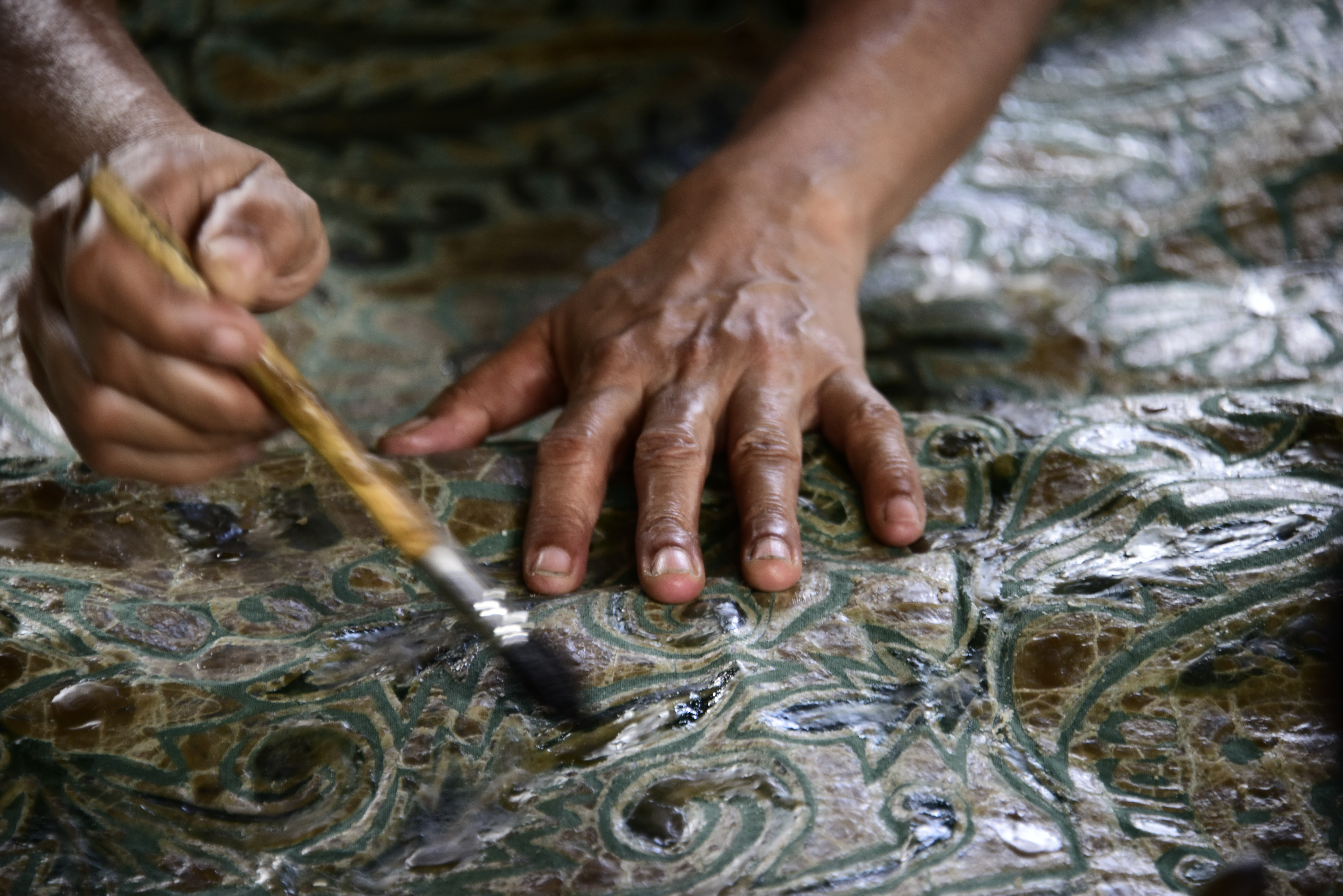
We also had a great visit to a small batik workshop, a lot of great food, saw a lot of Buddha statues, and an eclectic cast of animals and creatures. Oh, and we stopped at a lovely Colombo beach resort on our way out – no surprise. All in all, a very interesting journey.



 D & D Adventures