From Thailand we sailed to the Mergui Archipelago, a series of 800 islands that until 1996 was closed to all outsiders. A civilization of boat people called the Moken have survived without any of the modern conveniences for centuries, and until recently avoided any contact with visitors. We learned of their amazing history (including surviving the 2004 tsunami) from an author who spent seven years working to get close enough to them for interviews. Hard to believe life without Candy Crush or football. We didn’t bother them, but wandered through their beautiful islands, and had a barbeque on one of the nicest beaches I’ve ever seen. I also had a nice scuba day, though our dive master was disappointed we didn’t see any whale sharks – the biggest fish in the sea. Oh darn.


Next we went up the river to Yangon, Myanmar (named Rangoon, Burma by the British when they colonized it). 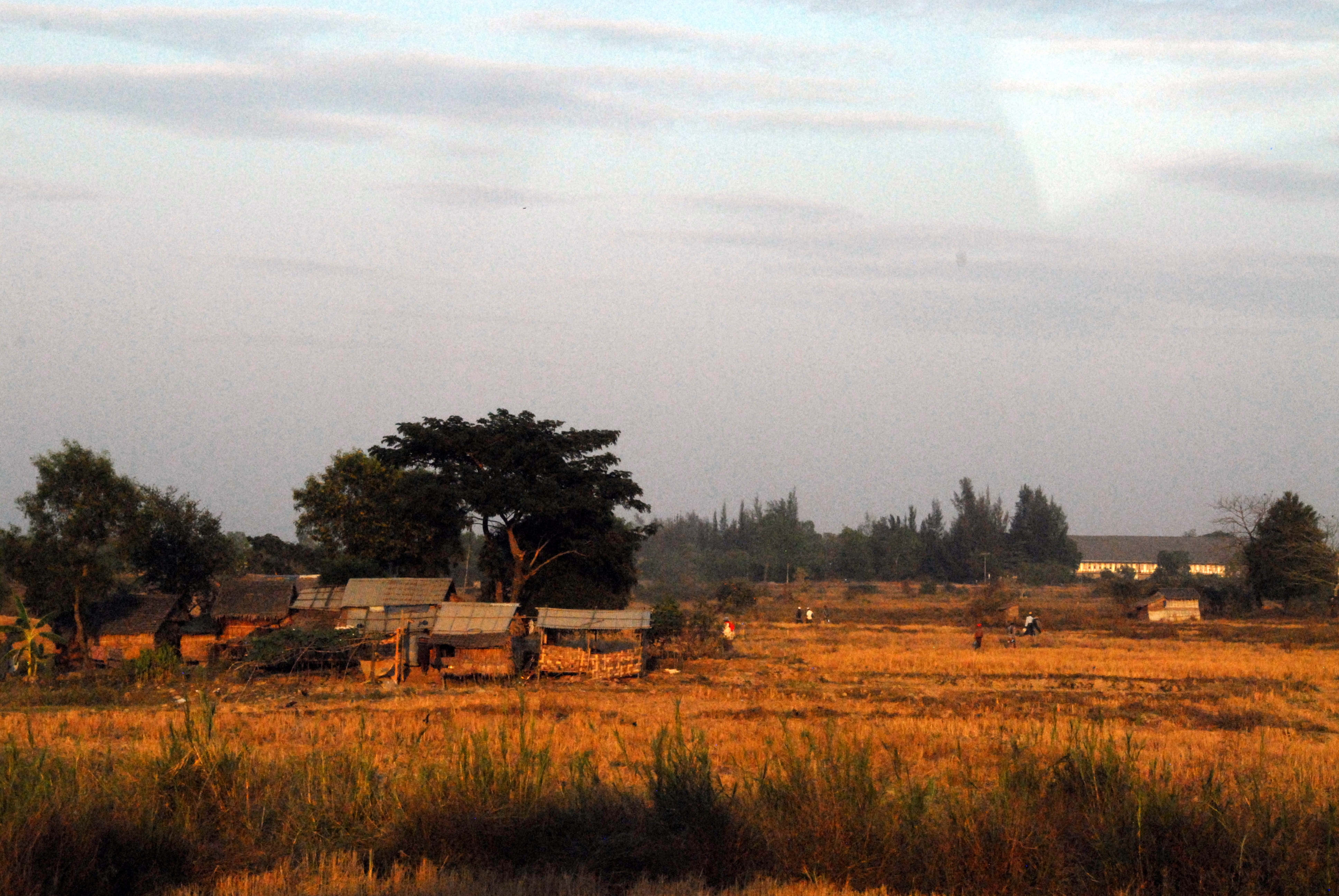 The time zone is one of the few that is 30 minutes off the hour – a British-era decision to align tea time to the sun. Many say, when traveling to Myanmar, “set your watch back 30 minutes, and your clock back 30 years.”
As with many ancient civilizations, religion plays a central role. 85% of the population is Buddhist, and a culture of tithing provides the funding for the institution. The most famous pagoda in Yangon is Shwedagon, which lights the center of the city and is arguably the oldest in the world.
Unfortunately, it was being renovated to replace worn gold panels and covered with bamboo scaffolding while we were there. I say “unfortunately” because it is covered with 60 tons of gold and they’re replacing a lot of the panels that have worn away. A country with desperate poverty, and in need of major infrastructure investment, is still giving priority to religious symbols. 60 tons of gold = $2.5 Billion. I’m sorry, I just don’t get it. Guess I’ll come back as a toad in my next life.


As we do often, we wandered through the markets (food and otherwise), tried all the local specialties (close to Indian, but not spicy – too bad), and saw some traditional theatrical performances. The country only had about 500,000 tourists per year until 2014 – mostly Chinese and Thai – so we were welcomed by all. Most we talked to see how Thailand made gains by being close to the U.S. and are hopeful that two visits by Obama will lead to increased freedoms, civil rights, and reduced sanctions. If you go, don’t read a tour book more than one year old – too much is changing.
In the last couple of centuries, Myanmar has had a confusing history. Years of traditional monarchic empires were replaced by British colonialism and civil wars, then Japanese occupation, then independence and democracy, then a military junta who moved to socialism for 25 disastrous years. The military leadership finally opened up their markets, but still suppressed human rights. Over the next 30 years, peaceful protests were crushed time and time again, causing international sanctions that made a bad situation much worse. Finally, a move towards democracy ensued thanks to pitiful government response to a devastating typhoon, global pressure and the influence of Nobel Prize winner Aung San Suu Kyi (the daughter of the man who lead the country to independence after World War II).
I find the present confusing too. Foreign investment (from China, Thailand, and Japan) is pouring in – but it seems to be applied in a hodge-podge manner. There appears to be plan. Duties on cars were dropped a few years ago, and the 1940’s road systems are overwhelmed with traffic. Massive new high-rise apartments are springing up, and people in flip-flops are building sewer systems by hand. The working class live across a river that is crossed using 1920 era ferries. I’m afraid we’ll read of one sinking some day. The country espouses tolerance for their official 135 minorities, but persecutes the Rohingya people in western Myanmar, arguing they are “foreigners” from Benali. Aung San Suu Kyi, now in Parliament, is positioning to be the next president if there is really a free election, but seems to be campaigning for a break-up of the country (like the Soviet Union) to win the votes of the many minorities. I can’t imagine that would be good. And, the military seems always just in the background – not unlike the country’s famous puppeteers.


One of my favorite quotes from my father is “Everyone’s entitled to an opinion. But you should only express an informed opinion.” I worked hard to understand this country in transition. I’m still ill-informed, but I can’t even form an opinion – I come away totally confused. I cannot predict what will come of this resource-rich country with its hard-working, friendly people. I will be following it carefully in the coming years, hoping for the best.
A 5 minute video of markets, scuba, and a few other scenes:
 D & D Adventures
Just catching up on some of the posts and longer videos. Charley and I LOVED watching the penguins! Super cool pics!
On Sat, Jan 24, 2015 at 5:54 PM, D & D Adventures wrote:
> Dave and Debra posted: “From Thailand we sailed to the Mergui Archipelago, > a series of 800 islands that until 1996 was closed to all outsiders. A > civilization of boat people called the Moken have survived without any of > the modern conveniences for centuries, and until recently ” >
LikeLike
So interesting that there are such huge differences in this world.
LikeLike