We took a train inland to the former capital, Kyoto – a popular tourist destination. Here, in 794AD, the forerunner to the Geisha tradition began. At that time, Shintoism held that wives were modest home-makers, and courtesans (prostitutes) were accepted for other needs. In 1617, courtesans were restricted from selling on the street and limited to working in houses called Yokaku. Beginning in 1750, Yokaku were “advertised” by performers in front of the houses (men and women) who were the first Geisha.
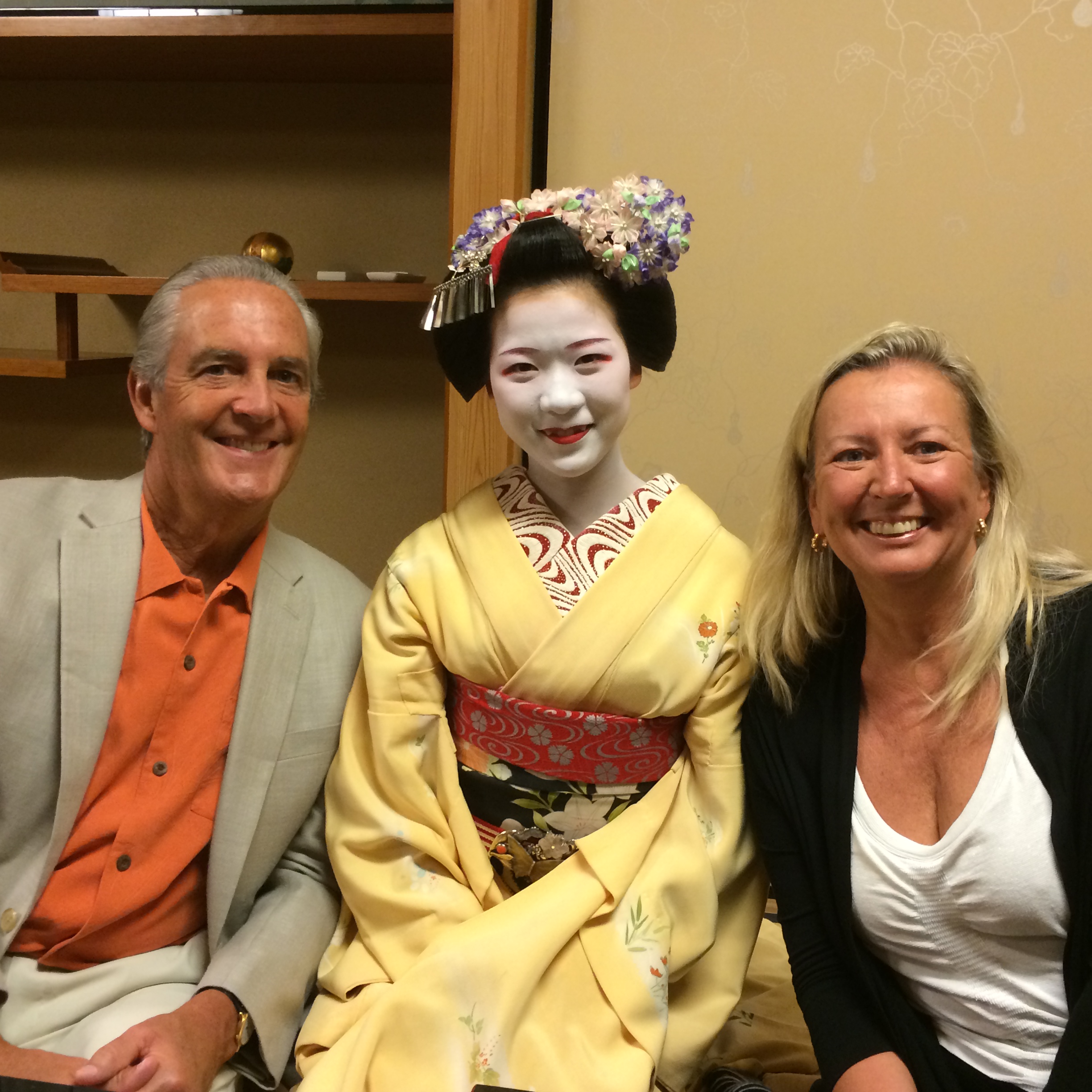
In the 1900’s, the concept evolved and split between courtesans and entertainers (Geisha). Geisha became an honorable profession and a way for lower-class girls to learn music, dance, singing, and conversational skills and enjoy a better life. They joined Geisha houses (leaving familial relationships behind) at a young age (not until 15 years old today) and then progressed through extensive training and “promotions” – much like someone might enter a religious seminary to become a priest or minister. While prostitution existed in the history of the Geisha, today they’re entertainers who are skilled at making businessmen feel special so they spend more money eating and drinking. FYI, the make-up job takes one hour to apply!
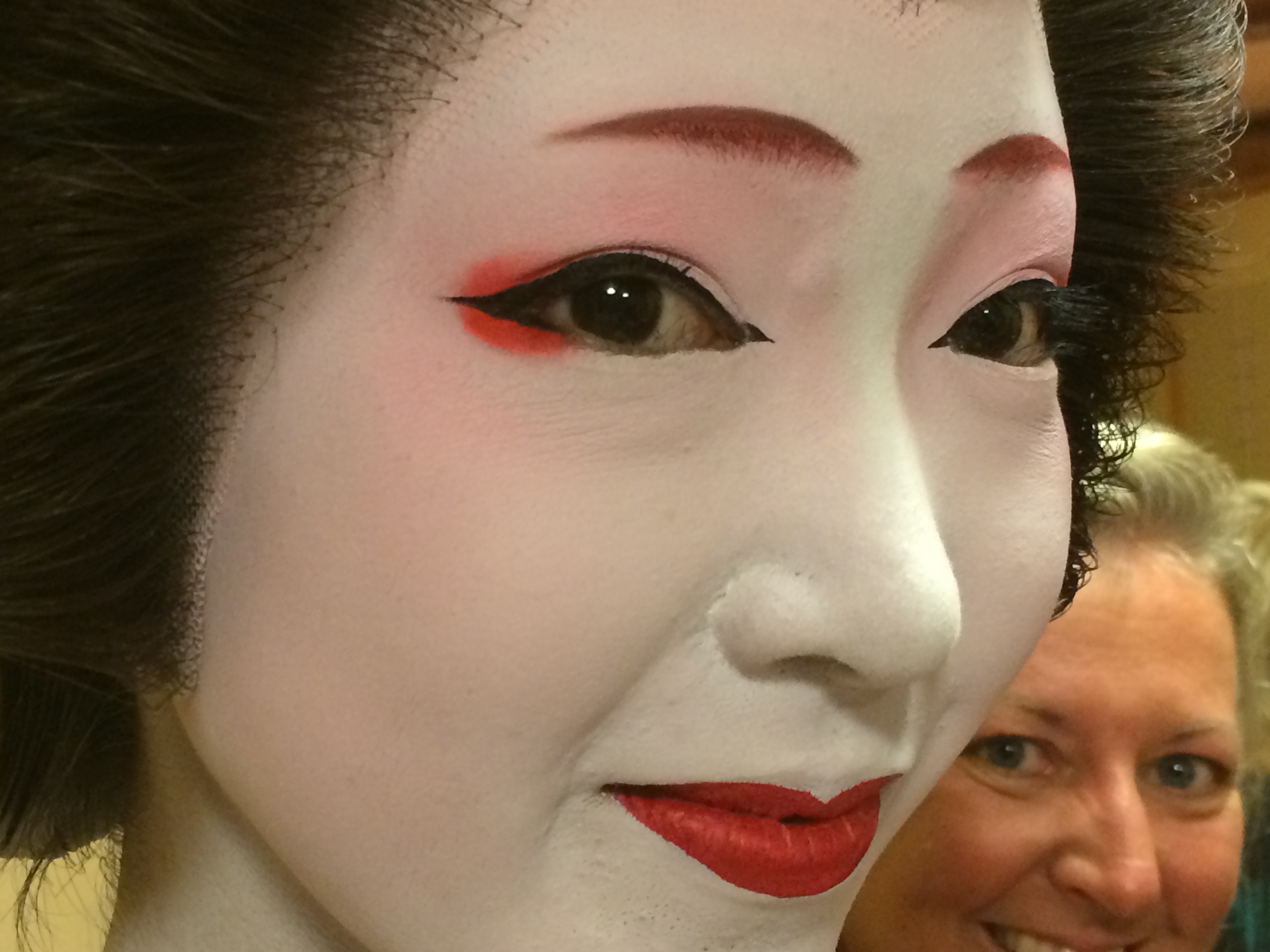
Anyway – despite our discomfort with the whole concept and history, we had an opportunity to have a typical evening dinner in a Geisha house and meet the “mother,” apprentices, a Maiko girl (second level) and a Geiko lady (full Geisha). After a bad meal and lots of Saki and beer, we were “entertained.” Watch the 4 minute video for a perspective and a grin.
 D & D Adventures
Interesting.
LikeLike